
A practical guide for B2B buyers comparing 20W laser engravers. Learn how dual-laser systems combine a 455nm diode and a 1064nm source, what each can mark, and how to verify cutting depth for your material before you order.
Buyers moving up from a smaller diode machine often ask the same question: what does the extra power in a 20 watt laser engraver actually buy me? The short answer is that a genuine 20W machine can handle thicker or denser stock than a 10W unit, but the real gain depends less on the wattage number and more on the wavelength of the laser source. A 20W machine may use one diode, one infrared source, or both. Knowing which configuration you are buying is the difference between a tool that marks bare metal and one that does not.
Key Takeaways
- A true 20W machine is rated at its optical output, not its wall-plug draw.
- The 455 nm diode source handles wood, leather, bamboo, paper and some plastics.
- The 1064 nm source addresses bare metals such as stainless steel and aluminum.
- A dual-laser 20W unit combines both wavelengths in one frame, so you do not need two machines.
- Cutting depth varies by material and thickness — confirm the number for your specific stock with the supplier before ordering.
Why ‘20 Watt’ Alone Does Not Tell You What a Machine Can Do
Optical output on a diode laser is the power that reaches the material surface. Two 20W machines can differ in beam quality, spot size and wavelength, and those three factors decide whether the beam cuts through a 3 mm plywood panel or simply scorches the surface.
Wavelength decides what the beam can absorb into. A 455 nm blue diode is well absorbed by organic materials — wood, leather, bamboo, paper, cardboard and many dark plastics. Bare metal reflects most of that blue light, so a diode alone struggles to mark it. A 1064 nm infrared source is absorbed differently and is the wavelength that addresses bare metals. If your production mix includes both wood and metal, the wavelength question matters more than the wattage.
This is why a WAINLUX X1 20W dual-laser engraving machine is worth comparing against a single-source 20W diode unit. The X1 combines a 455 nm diode source and a 1064 nm source in one machine, so the same frame handles wood, leather and bamboo with one source and bare metals with the other. That configuration removes the need to keep two separate machines on the bench for mixed-material work.
What a 20W Laser Engraver Can Cut and Mark
Materials handled by the 455 nm diode source
The blue diode side of a dual-laser 20W machine covers the materials most workshops already process:
- Wood and plywood — engraving and through-cuts on thin stock
- Leather and faux leather — marking and cutting for tags and small goods
- Bamboo and cork — engraving and cutting
- Paper and cardboard — cutting and scoring
- Some plastics — marking and cutting where the material is compatible (test first; not all plastics are safe to laser)
Materials handled by the 1064 nm source
The infrared source addresses bare metals that reflect visible blue light. This is the wavelength that opens up metal marking without a fiber laser budget:
- Stainless steel — marking, including dark marking on some surfaces
- Aluminum — marking on bare or anodized surfaces
- Brass and copper — marking
- Coated metals — where the coating is compatible with the process
If your work is almost entirely metal, a dedicated 1064 nm machine such as the WAINLUX K8 1064nm laser engraving machine is the simpler choice. If you need both metal and organics from one machine, the dual-laser X1 covers both categories.
What about cutting depth?
Cutting depth is where spec sheets tend to overpromise. The maximum depth a 20W machine reaches depends on material density, thickness, the number of passes, focus and air assist. Rather than quote a single depth figure that may not hold for your stock, confirm cutting depth for your material thickness with the supplier. Ask for a test cut on the exact material and thickness you plan to run, not a general claim.
Reading a 20W Machine’s Spec Sheet Like a Buyer
When you compare quotes from different suppliers, the following points separate a real 20W dual-laser machine from a relabeled lower-power unit.
| Specification | What to Check | Why It Matters |
|---|---|---|
| Laser source | Diode only, infrared only, or dual | Determines whether bare metal is in scope |
| Wavelength(s) | 455 nm, 1064 nm, or both | 455 nm for organics; 1064 nm for metals |
| Optical output | Stated as optical power, not input power | Input ratings overstate real cutting capacity |
| Work area | Confirm usable dimensions | Decides the largest single piece you can process |
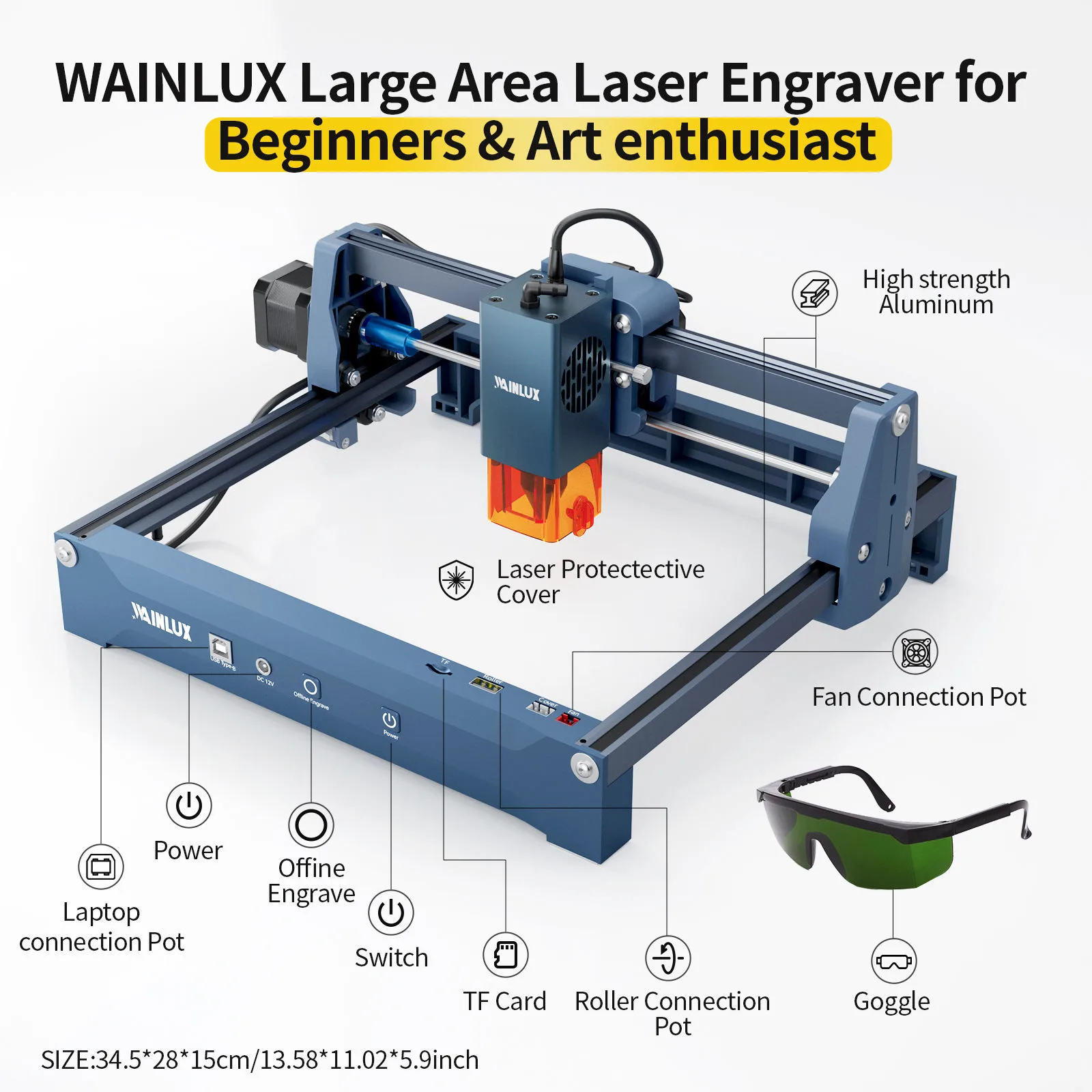
| Frame and cover | Aluminum frame, laser protective cover | Rigidity and operator safety |
| Offline operation | TF card support | Run jobs without a tethered PC |
| Accessories | Safety goggles included, roller port | Safety and cylindrical work options |
A Reference Configuration: WAINLUX X1 20W Dual-Laser
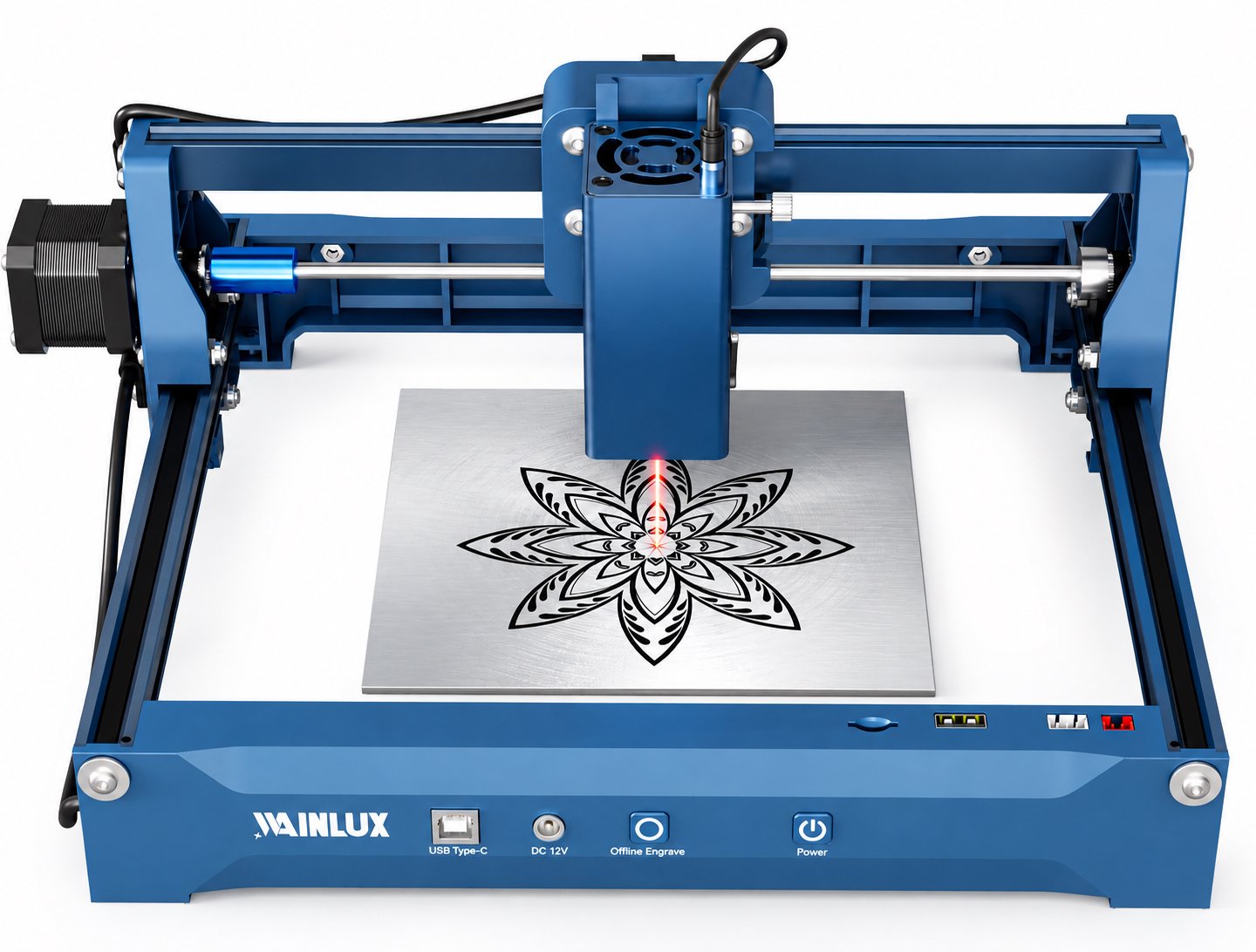
The WAINLUX X1 is a concrete example of what a 20W dual-laser machine includes. It pairs a 455 nm diode source with a 1064 nm source in one unit, giving a work area of 30×30 cm. The aluminum frame keeps the gantry stable across that area, and the included laser protective cover is part of the machine rather than an add-on.
Operationally, the X1 supports TF card offline engraving, so an operator can load a job and run it without a computer attached. A roller connection port is provided for rotary work on cylindrical objects. Safety goggles are included in the package. The machine measures approximately 34.5×28×15 cm, which matters if you are planning bench space or calculating shipping volume for resale.
Xiamen Spring Technology (WAINLUX) manufactures this machine and holds ISO9001 and CE certification. For buyers who need documentation for import or resale, request the current certificate copies with your quotation rather than assuming a standard pack.
How to Match a 20W Machine to Your Production Mix
Work backward from the jobs you actually run:
- Wood, leather and paper only. A single-source 455 nm diode at 20W is enough. Do not pay for a 1064 nm source you will not use.
- Metal marking only. A dedicated 1064 nm machine is the cleaner fit; you will not need diode optics or the associated materials handling.
- Mixed material batches. A dual-laser 20W machine such as the X1 avoids swapping machines mid-job and keeps one work area and one set of settings.
- Resale or distribution. Confirm which wavelengths your market asks for. Metal marking capability is often the deciding feature for buyers who already own a diode machine.
For each of these, ask the supplier two questions: what optical output is the 20W rating based on, and what work area is usable after accounting for the frame and cover. The answers will tell you more than the headline wattage.
Safety and Compliance Points for B2B Buyers
Laser machines sold into industrial or educational buyers usually need to clear internal safety review. The protective cover and included goggles address the operator side. For documentation, ISO9001 covers the manufacturing quality system, while CE covers the product’s conformity for the European market. If your destination market requires additional marks or documentation, list them in the inquiry so the supplier can confirm what is available instead of you discovering a gap at customs.
Frequently Asked Questions
Is a 20W laser engraver powerful enough to cut wood?
It can cut wood, but the practical thickness depends on the wood species, density and whether you use multiple passes. Confirm the cutting depth for your board thickness with the supplier and ask for a test cut on that material.
Can a 20W diode laser mark stainless steel?
A 455 nm diode source does not address bare metal effectively. Metal marking requires a 1064 nm source, either as a dedicated machine or as the second source in a dual-laser unit.
What is the difference between a 20W diode and a 20W dual-laser machine?
A 20W diode machine has one 455 nm source and works with organics. A 20W dual-laser machine adds a 1064 nm source in the same frame, extending coverage to bare metals while keeping the same work area.
What work area should I expect?
Work areas vary by model. The WAINLUX X1 offers 30×30 cm. Compare usable area across machines rather than assuming all 20W units share the same bed size.
Can the machine run without a computer?
The X1 supports TF card offline engraving, so jobs can be loaded and run without a tethered PC. Check this feature on any model you are comparing if offline operation matters in your workshop.
Verify Before You Buy
A 20 watt laser engraver is a capable step up from a smaller diode unit, but the capability boundary is set by wavelength, not wattage alone. Buyers who need both wood and metal marking should look for a dual-laser configuration; buyers who work in one material category can often save by choosing a single-source machine.
Before finalizing an order, request the cutting depth for your specific material thickness, confirm the usable work area, and ask which certification documents ship with the unit. For the dual-laser configuration described here, review the WAINLUX X1 20W dual-laser engraving machine specifications against your production mix, and contact the supplier with your material list to confirm performance on your stock.