
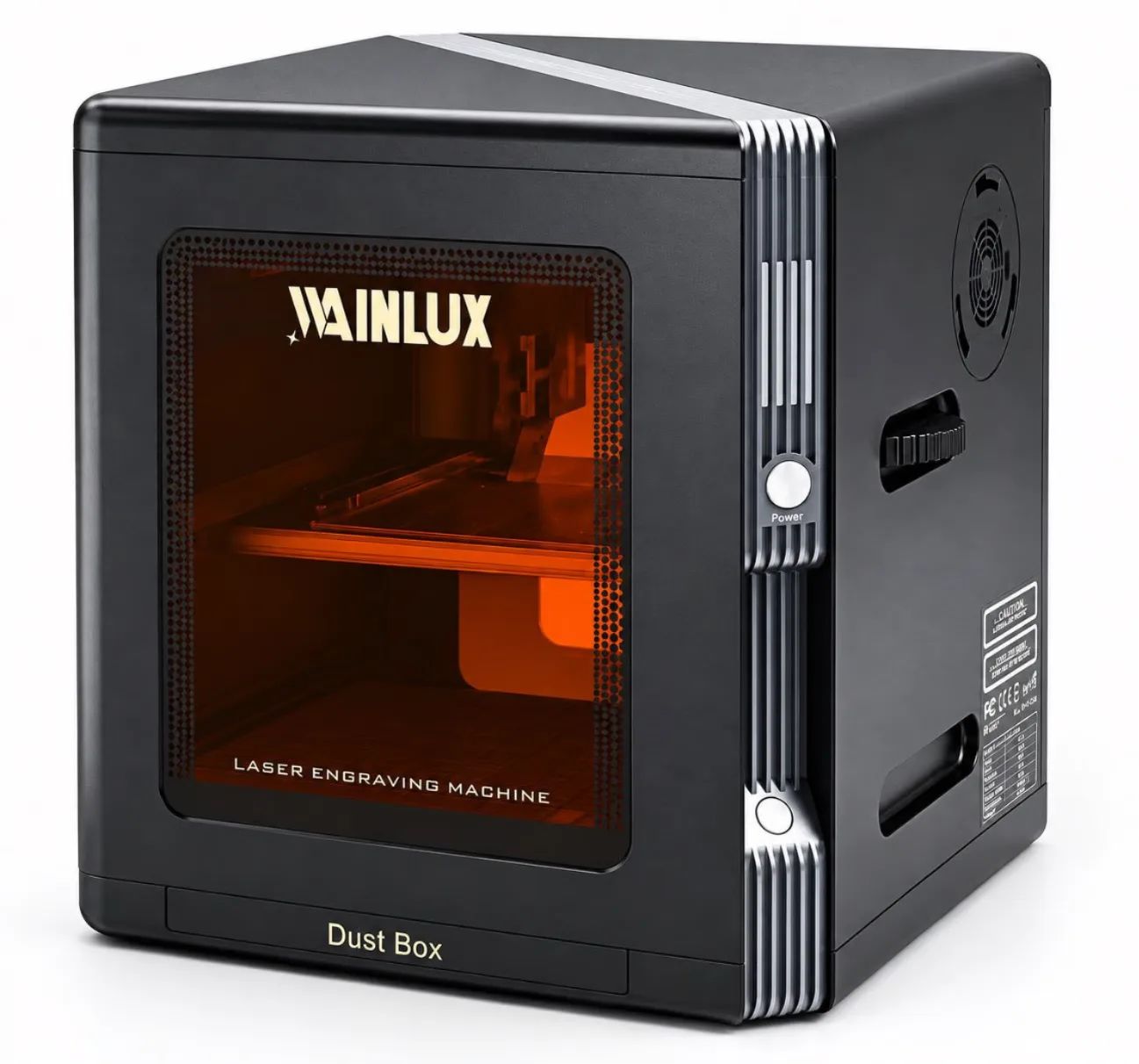
A pre-order checklist for buyers evaluating a laser glass etching machine for sale: wavelength and settings questions, sample acceptance criteria, round glassware fixtures, glass dust safety, and supplier questions to ask before payment.
Buyer Checklist
Glass is not a metal. That single fact reshapes almost every question you should ask before paying for a laser glass etching machine for sale. A 1064nm laser marks bare metal reliably; glass marking needs the appropriate wavelength and settings, which vary by glass type and finish. That means the purchase decision hinges less on a single number and more on verification: of wavelength suitability, sample results, round-part fixturing, and the supplier's willingness to answer specific technical questions in writing.
This checklist is not a market overview. It is the six checks buyers commonly run through right before signing a purchase order, from wavelength confirmation to safety handling for glass dust. Use it to compare quotes, then ask for sample evidence before you pay.
Key takeaways
- Confirm the wavelength and settings the supplier recommends for your exact glass type and finish.
- Approve a physical sample on your own glass, not a generic demonstration piece.
- Match fixtures and work area to part shape and size, especially for round glassware.
- Agree on glass dust safety measures and documentation before installation.
- Get answers in writing on service, spares, and application support before payment.
Why a Pre-Order Check Matters for Glass

Metal marking is comparatively predictable: many bare-metal jobs are handled by 1064nm lasers, and a machine's work area and precision are stated up front. For example, the K8-1064nm laser engraving machine is a 1064nm unit for bare metal with an 8 x 8 cm area and 0.01 mm precision. Those numbers describe a metal-marking tool; they are not a statement about glass results. When a supplier offers a laser glass etching machine for sale, the responsible conversation is: "Which wavelength and settings does my glass need, and can you show me a sample in my material?"
Glass behavior depends on composition, surface treatment, and whether you are marking, frosting, or deep etching. The same machine may perform differently on clear float glass, tinted glass, borosilicate, or coated drinkware. The checklist below keeps that in view.
The Six Checks Before You Order
-
Confirm wavelength and settings match your glass
Do not accept a generic "works on glass" claim. Ask the supplier to specify the recommended wavelength for your glass type and thickness, and the settings they expect to use. For reference, 1064nm is a wavelength commonly used for bare metal marking; glass marking needs an appropriate wavelength and settings, which the supplier should state for your application. If they cannot name the wavelength they intend to use, treat that as a gap in the quote.
-
Demand a sample on your own glass
A sample is the single most useful pre-order document. Send your glass, or a matched offcut, and ask for a marked sample with the intended settings. What to demand:
- Marking on your actual glass, not a stock demo piece.
- Edge quality, consistency across the field, and visible cracking or chipping.
- Before-and-after photographs under the same lighting.
- A note of wavelength, power, speed, and any post-processing used.
If sample turnaround is quoted, get it in writing. Sample approval is your acceptance baseline: the production unit should reproduce that result.
-
Match fixtures and work area to your parts
Fixtures decide whether a glass job is repeatable. Flat panels need stable support; round glassware such as tumblers, bottles, or vials usually needs a rotary or rotary-axis fixture to keep the marking aligned. Ask how the supplier handles round parts and whether a fixture is included or quoted separately. Also confirm the work area against your largest part: an 8 x 8 cm area is enough for small items, but larger glassware may require a different configuration.
-
Get the glass dust safety plan
Etching and marking can produce fine glass dust or debris. The supplier should explain extraction, filtration, and operator protection for your setup. Confirm this before installation, not after.
-
Ask about service, spares, and training
A glass marking setup is only as useful as its uptime. Ask about spare parts availability, expected lead times for consumables, remote or on-site support, and operator training. Written answers here protect your production schedule.
-
Verify the supplier's application support
Glass is a materials problem as much as a machine problem. Ask whether the supplier can advise on application matching and provide OEM/ODM options for your product line. A supplier with in-house engineering can help you select the right configuration instead of selling a machine that almost fits.
For context, sourcing from an established manufacturer matters: WAINLUX has been manufacturing since 1998, holds an ISO9001 company-level certificate, offers OEM/ODM, and exports to 50+ countries. Confirm current certification scope and service terms with the supplier for your order.
Checks Versus What to Verify
| Check | What to verify with the supplier |
|---|---|
| Wavelength suitability | Recommended wavelength and settings for your specific glass type, thickness, and finish; written confirmation that glass marking is within the machine's intended use. |
| Sample quality | A marked sample on your own glass with recorded parameters; edge condition, consistency, and any cracking or chipping noted. |
| Round glassware fixtures | Whether a rotary fixture is needed and included; how round parts are held and aligned; work area versus your largest part size. |
| Glass dust safety | Extraction and filtration method, operator protection, maintenance schedule, and local compliance requirements. |
| Service and spares | Spare parts list, lead times, support channels, training, and warranty terms in writing. |
| Application support | Whether the supplier can advise on application matching and OEM/ODM; ask for the engineer or technical contact who will support your order. |
Questions to Ask Before Paying
Put these to the supplier in writing and keep the replies with your order documents:
- Which wavelength and settings do you recommend for my glass type and thickness, and why?
- Can you send a marked sample using my glass, with the settings recorded?
- What fixture is required for round glassware, and is it included in the quoted price?
- How is glass dust managed, and what safety documentation is provided?
- What spare parts should I stock, and what are their lead times?
- Who provides application support after delivery, and how are they reached?
- What are the payment, inspection, and delivery terms, and what happens if the sample result is not reproduced?
Safety note: Glass dust and debris from etching or marking can be harmful if inhaled. Before operating any laser on glass, confirm the supplier's recommended extraction and filtration setup, provide suitable operator protection, and follow local workplace safety rules. Do not run glass marking without a dust management plan in place.
How the Six Checks Fit Together
The checks are not independent. Wavelength and settings determine whether glass marking is feasible; the sample proves it in your material; fixtures decide whether it repeats on your parts; safety keeps the process usable; service and application support keep it running. A supplier who answers all six in writing is easier to hold to the agreed result, and a quote that skips one of them is worth pausing on before you pay.
If your operation also marks bare metal, a separate 1064nm machine such as the K8-1064nm laser engraving machine (8 x 8 cm area, 0.01 mm precision) may suit that part of the work. For glass, keep the wavelength and settings question front and center, and let the sample be your acceptance test.
Next Step
If you are comparing a laser glass etching machine for sale, send your glass type, part dimensions, and production target to the supplier and ask for a sample and a written answer to the six checks above. You can also review the K8-1064nm laser engraving machine for bare-metal work and ask the same supplier to advise on application matching for your glass line.