
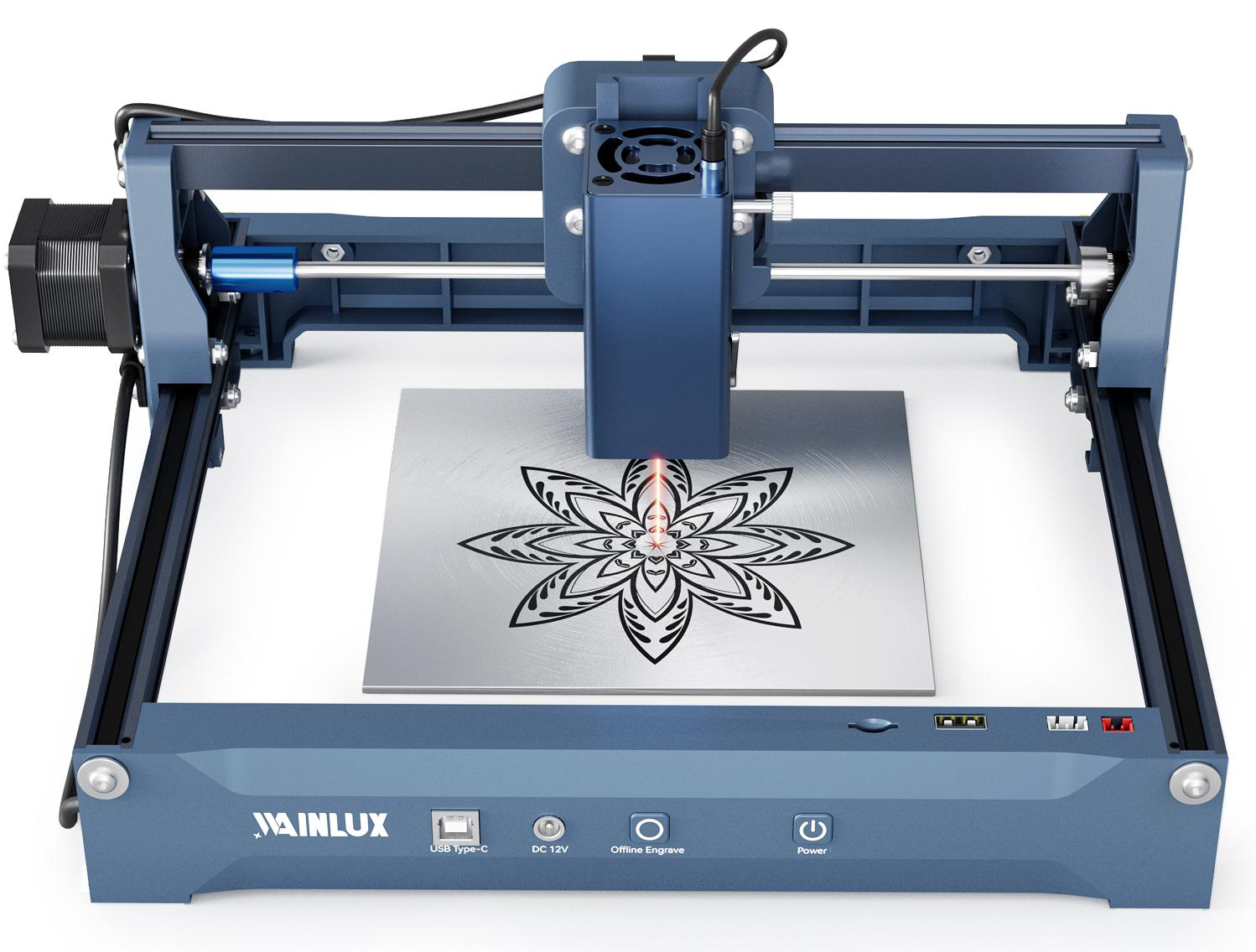
How to choose a wood laser engraving machine by power tier, bed size and throughput — with real single-pass cutting depths for plywood and pine.
Wood is the friendliest material for a wood laser engraving machine — and the easiest one to over-buy or under-buy. Power, bed size and throughput interact, and the right combination depends on whether you engrave finished products, cut parts, or both. Here is how the real numbers map to real decisions.
Power: What Each Wattage Tier Actually Cuts
Cutting depth is the clearest divider between tiers, and honest specifications state the material and thickness together:
- 3W–5W diode units (K8-5W, K10-5W, X2-5W): engraving-focused; simple cutting up to 3–5mm plywood — fine for veneer, tags and thin craft stock, not for production cutting.
- 10W units (K8-10W, X2-10W, X1-10W): cut 5–8mm plywood and thin pine; engrave blackened stainless steel as a bonus.
- 20W (L8-20W): cuts 12mm plywood and 15mm pine in a single pass — production territory.
- 40W (L8-40W): cuts 15mm plywood and 20mm pine in a single pass, the flagship tier for furniture-grade stock and signage.
Buy one tier above your thickest routine material, not five. Multi-pass cutting exists, but it costs time and scorches edges — if you routinely need single-pass cutting at a given thickness, buy the tier that does it in one.
Bed Size: the Specification You Cannot Upgrade Later
- 8x8cm (K8/K10): keychains, tags, coasters, small logos.
- 10x10–15x20cm (F1, X2): keepsake boxes, small signs, tumblers-adjacent items.
- 30x30cm (X1): leather goods, panels, multi-item batch layouts.
- 40x40cm (L8): signage, cabinet panels, nesting multiple parts per run.
Measure your three largest real products before choosing. A bed one size too small converts every large job into a two-position setup — or a second machine purchase.
Throughput: Where the Time Actually Goes
Engraving speed matters, but production throughput is usually decided by setup and workflow:
- Fixturing: repeatable placement beats fast beam speed when every unit must align identically.
- Focus and positioning: one-touch autofocus (X1 line) and smart positioning (K8/F1 lines) remove minutes per job that multiply across a batch.
- Cutting accessories: for the L8 tiers, the included air pump and honeycomb board are throughput equipment, not extras — clean kerfs and less backside scorching mean less rework.
- Control modes: PC, mobile app and offline control each suit a different production rhythm; offline mode matters when the machine runs the same file all day.
Three Real Configurations
- Craft seller, engraving only: K10-5W (8x8cm) or X2-5W (15x20cm). Low cost, full material range, simple cutting when needed.
- Personalization workshop with mixed orders: X2-10W (15x20cm) for steel + wood, or X1-10W (30x30cm) when panels and batches dominate.
- Production cutting shop: L8-20W for 12mm plywood, L8-40W for 15mm plywood and 20mm pine in one pass — with air assist and honeycomb included.
FAQ
Can a 5W machine run a wood-products business?
Yes, for engraving-focused work and thin-stock cutting. It becomes the bottleneck when routine jobs exceed 5mm plywood — that is the signal to move to 10W or 20W.
Is single-pass cutting really important?
For production, yes: multi-pass cutting multiplies cycle time and increases edge charring. If your product spec demands a thickness, buy the tier that cuts it in one pass.
Which woods engrave best?
Light, low-resin woods (plywood, pine, basswood) give the highest contrast; dense or oily hardwoods need power and speed adjustments. Test your actual stock — samples from 1–5 units make this cheap.
Match Your Stock to a Machine
Email your material thicknesses and daily volume to [email protected]. Xiamen Spring Technology Co., Ltd. manufactures the WAINLUX 3W–40W wood engraving and cutting range and will confirm the right tier with sample cuts on your stock.