
A B2B buyer's guide to choosing a heat press machine for shirts, comparing five SPRING models from a 4.17x2.44in mini plate to a 12x10in full-front platen, with temperature ranges, voltage options and CE/ROHS/FCC certification.
Choosing a heat press machine for shirts is mostly a sizing exercise. The artwork you press, the blanks you decorate and the volume you ship decide the platen, the temperature range and the electrical configuration you need. This guide walks through those decisions with the listed specifications of five SPRING models, from a 4.17 x 2.44 in mini plate to a full-front 12x10in platen, so you can match a model to your product range before you request a quotation.
Three specifications decide the fit
Whether a supplier listing calls it a heat machine press, a clamshell press or a swing-away unit, the same three inputs decide whether it fits your job:
Platen size. The heated plate defines the largest single artwork you can press in one pass. Compare it against your print area, not the machine's footprint.
Temperature range. Sublimation, heat transfer vinyl (HTV) and transfer paper each sit in a different temperature band, and the machine's range has to cover the band your material supplier recommends.
Power and voltage. Wattage affects warm-up time, and the voltage version (110V or 220V) must match the destination market's grid.
Every model covered below is listed with CE, ROHS and FCC certification at the product level, which covers the compliance checks importers in North America and Europe commonly run for electrical equipment.
Match the platen size to your product range
Mini plate: patch-scale and trim work
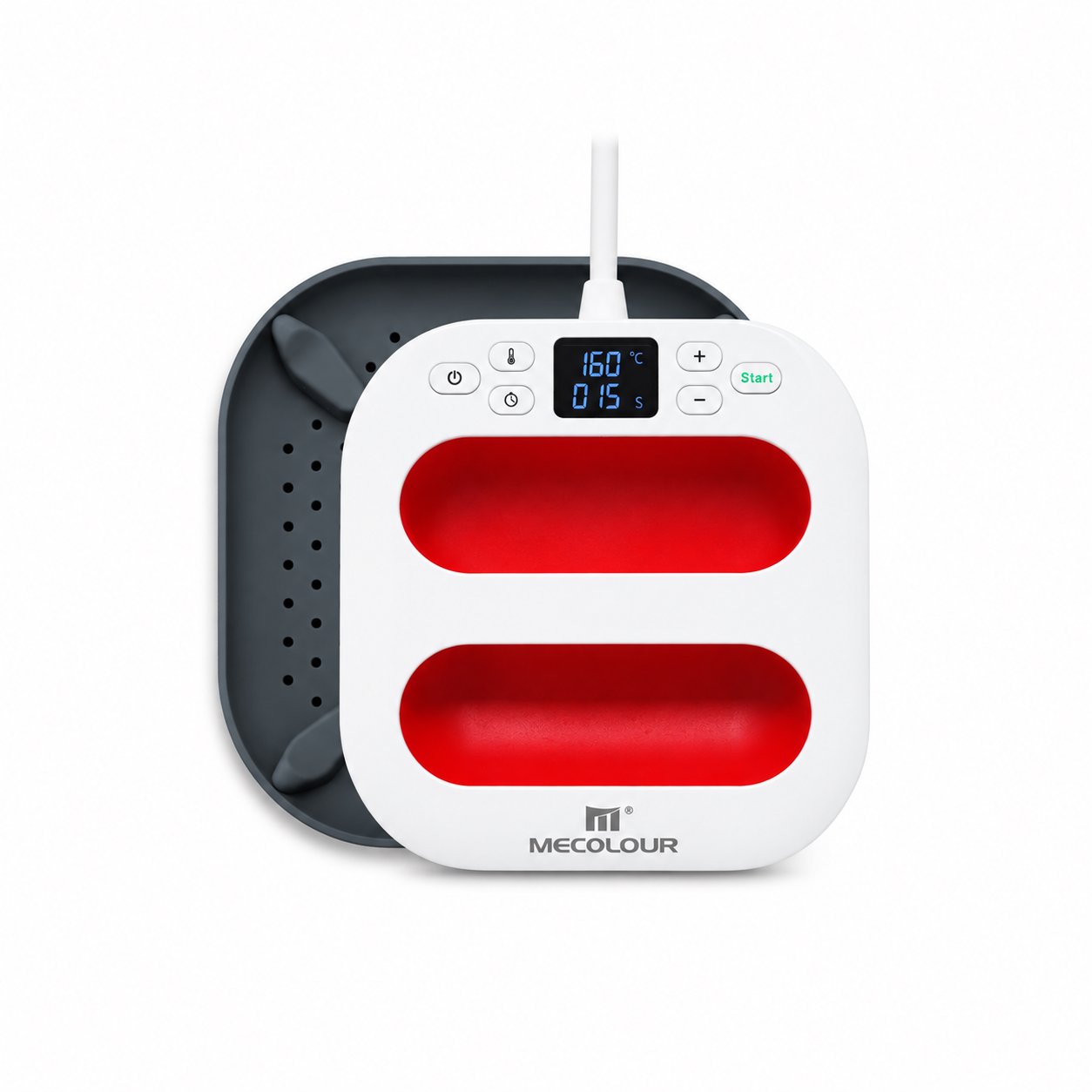
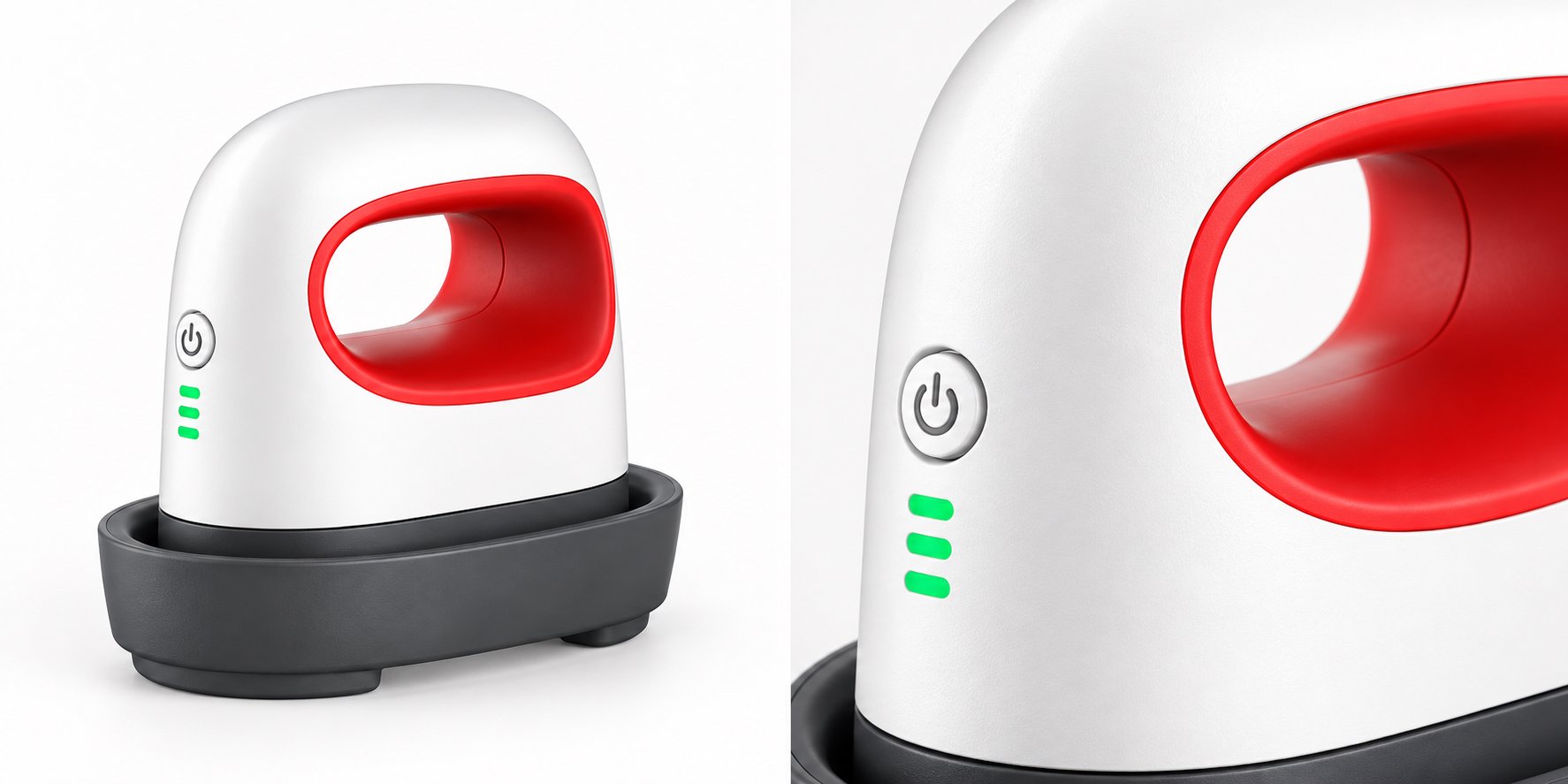
For pockets, sleeves, cuffs, hat panels and patch-scale transfers, the SPRING C02 mini heat press machine covers a 4.17 x 2.44 in plate with three fixed temperature steps at 140°C, 160°C and 190°C, and is listed with 180W or 250W power options. The compact body suits bench-top and counter-top work where a full-size press would be oversized.
Small format: caps, patches and babywear
The SPRING C08 5x7in heat press machine sits between the mini plate and a full shirt front. It is a manual unit with a digital display for temperature and time, sized for cap fronts, patches, babywear and pouches. Its listing covers the platen size, type and certification; the power rating and temperature range are not stated in the public listing and are provided in the datasheet on request. Because it presses one small item per cycle, it works best as a dedicated small-format station alongside larger equipment, or as a first machine for low-volume production.
9x9in: desktop T-shirt transfer work
Sourcing teams often start from phrases like heat transfe shirt press, shorthand for pressing transfer sheets onto finished garments. If that is your core job and your artwork fits within 25x25cm, the SPRING C03 9x9in heat press machine is the desktop clamshell option: it is listed with 900W or 1000W power, an 85-205°C range, and both T-shirt heat transfer and sublimation among its stated processes. Chest logos, left-breast prints and sleeve graphics fit in one pass; a full-width back print does not.
12x10in: full-front production
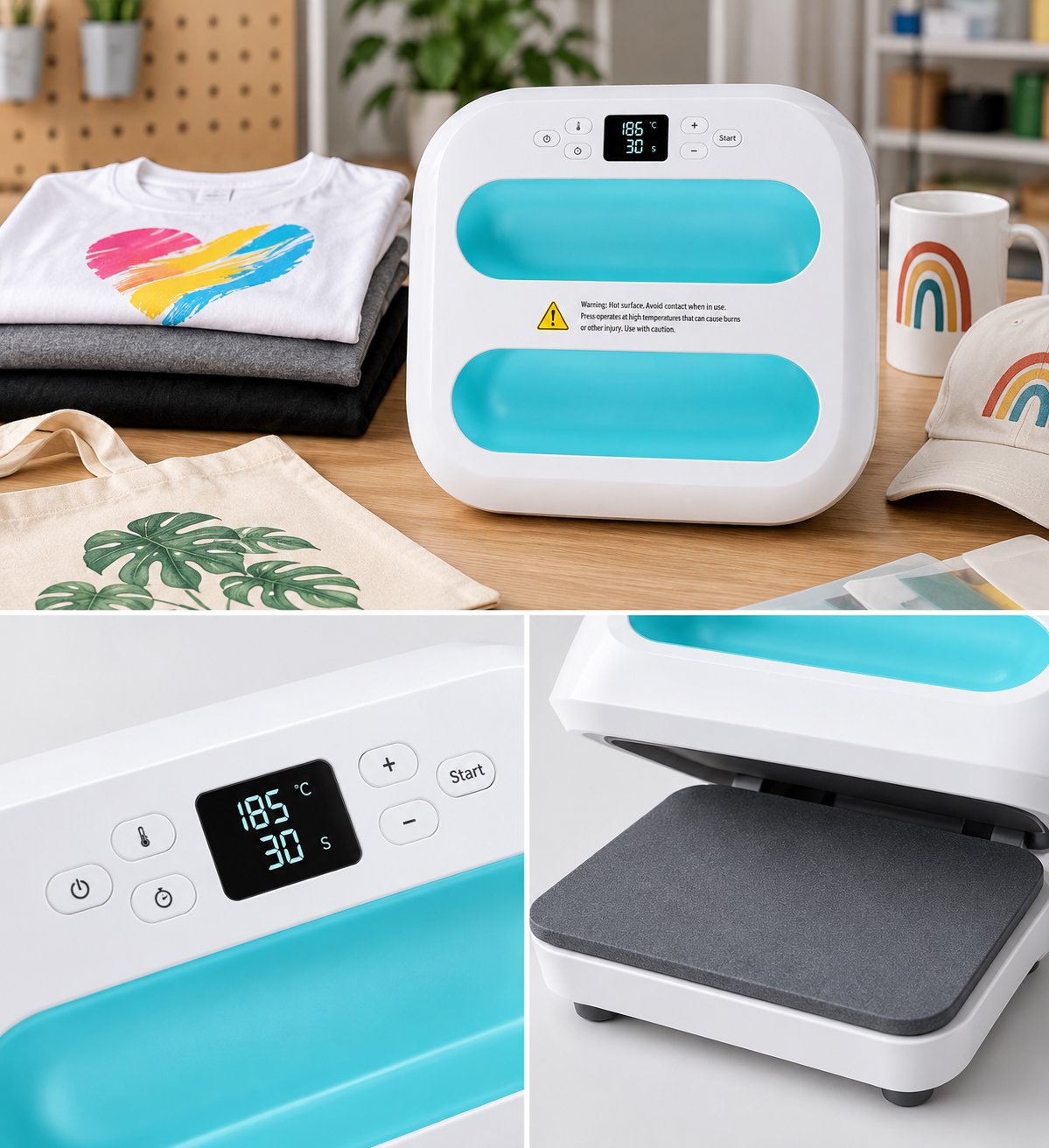
For full-front shirt pressing on adult sizes, the platen has to cover the whole print in one cycle. Both the SPRING C05 12x10in heat press machine and the SPRING C10 12x10in heat press machine do that: the C05 offers customizable 110V/220V voltage with 1250W or 1350W power ratings and an 85-205°C adjustable temperature range, while the C10 runs 1200W with a 100-205°C range and a digital LED control panel. At this size, tote bags, skirts and hat panels press on the same platen without repositioning the garment.
Temperature range and the blanks you press
The blank matters as much as the machine. T shirts for heat press work fall into two broad groups: polyester and polymer-coated items for sublimation, and cotton or cotton-blend shirts for HTV and transfer paper. Match the three heat and press parameters — temperature, dwell time and pressure — to your transfer supplier's instructions before you commit to a model.
As a frame of reference, the working bands stated across the SPRING product listings are:
Polyester sublimation: typically 180-205°C, depending on the substrate and ink system.
HTV vinyl: usually 150-170°C for cotton and cotton-blend garments.
Heat transfer paper: often 160-180°C for light and dark fabrics.
The C03 and C05 both list an 85-205°C adjustable range, which covers all three bands; the C10 lists 100-205°C; the C02 uses three fixed steps. Where a process depends on a precise setpoint, confirm the machine's range against the material supplier's recommendation before ordering.
Power, voltage and certification
Voltage is a one-time decision at purchase: the C05, for example, supports 110V and 220V, and the correct version is configured for your grid rather than switched in the field. State the destination market and the power variant with every inquiry so the unit ships matched to your electrical specification. Certification is listed at the product level for all five models — CE, ROHS and FCC — and the manufacturer, Xiamen Spring Technology Co., Ltd., operates an ISO9001-certified quality management system at company level and accepts OEM and ODM cooperation.
Quick model comparison
Model | Platen | Power | Temperature | Format |
|---|---|---|---|---|
SPRING C02 | 4.17 x 2.44 in | 180W / 250W | 140 / 160 / 190°C fixed steps | Mini press, manual |
SPRING C08 | 5 x 7 in | Not listed; datasheet on request | Not listed; datasheet on request | Mini press, manual, digital display |
SPRING C03 | 9x9in (25x25cm) | 900W / 1000W | 85-205°C | Desktop clamshell |
SPRING C05 | 12 x 10 in | 1250W / 1350W | 85-205°C | Manual, 110V/220V customizable |
SPRING C10 | 12 x 10 in | 1200W | 100-205°C | Manual, digital LED |
All five models are listed with CE, ROHS and FCC certification. The C08 row is blank where the public listing does not state a value; request the datasheet with your inquiry instead of assuming a figure. The same applies to specifications such as machine weight, package dimensions and pressure adjustment on any model.
Samples, warranty and logistics as listed
For buyers who want to test before committing, the C02 and C03 listings state sample terms directly: sample orders of 1-5 units with 100% prepayment, samples in stock and packed on the same day, with official orders at 50 pcs and above paid 70% prepayment and 30% balance before shipment by T/T. Confirm the sample terms for whichever model you shortlist, as they are stated per listing.
On after-sales, the C02 and C03 listings state a 1-year warranty on spare parts; for non-human-damage faults, the technical team reviews an operation video and a video of the malfunction before issuing a solution. The logistics timings stated in those same listings are 2-3 business days to a freight forwarder warehouse in China, 5-9 business days international DAP, and 12-15 business days air freight DDP, with sea freight DDP varying by region; units ship in minimum-volume carton packaging with a packing list, proforma invoice and commercial invoice. These figures are the supplier's stated terms, so reconfirm them for your model and destination when you inquire.
Frequently asked questions
What platen size do I need for a standard T-shirt front?
A 12x10in platen covers a full-front print on most adult T-shirts in one pass. A 9x9in platen suits chest logos and smaller graphics; a full-width back print does not fit either a 9x9in or a 5x7in plate in a single pass.
Can one machine handle both sublimation and HTV?
If the adjustable range covers both bands — the C03 and C05 list 85-205°C — the machine can run either process, but temperature, dwell time and pressure must follow your transfer or ink supplier's instructions for each material batch.
Which voltage version should I order?
Match the version to your facility's mains supply. Where a model supports both 110V and 220V, specify the required version when ordering; there is no field switch on the unit.
What certification should I expect for import?
All five SPRING models covered here are listed with CE, ROHS and FCC certification at the product level. If your import process needs specific documents, name them in your inquiry so the matching paperwork can be confirmed.
Can I test before committing to a volume order?
Yes. The C02 and C03 listings state sample orders of 1-5 units with 100% prepayment, in stock and packed the same day; official orders run 50 pcs and above. Confirm the sample terms for your shortlisted model when you inquire, along with your destination market and the largest artwork size you press.
Shortlist with the specs, then confirm the details
Whichever size your catalogue demands, the fastest way to shortlist a heat and press machine is to fix three inputs first: the largest artwork you press, the temperature band your materials need, and the grid voltage at your destination. Those three answers point to one of the five SPRING models above; the sample terms, warranty and logistics timings above give you the rest of the framework, and the remaining order-specific details — OEM or ODM options among them — are settled with the supplier before the order is placed.