
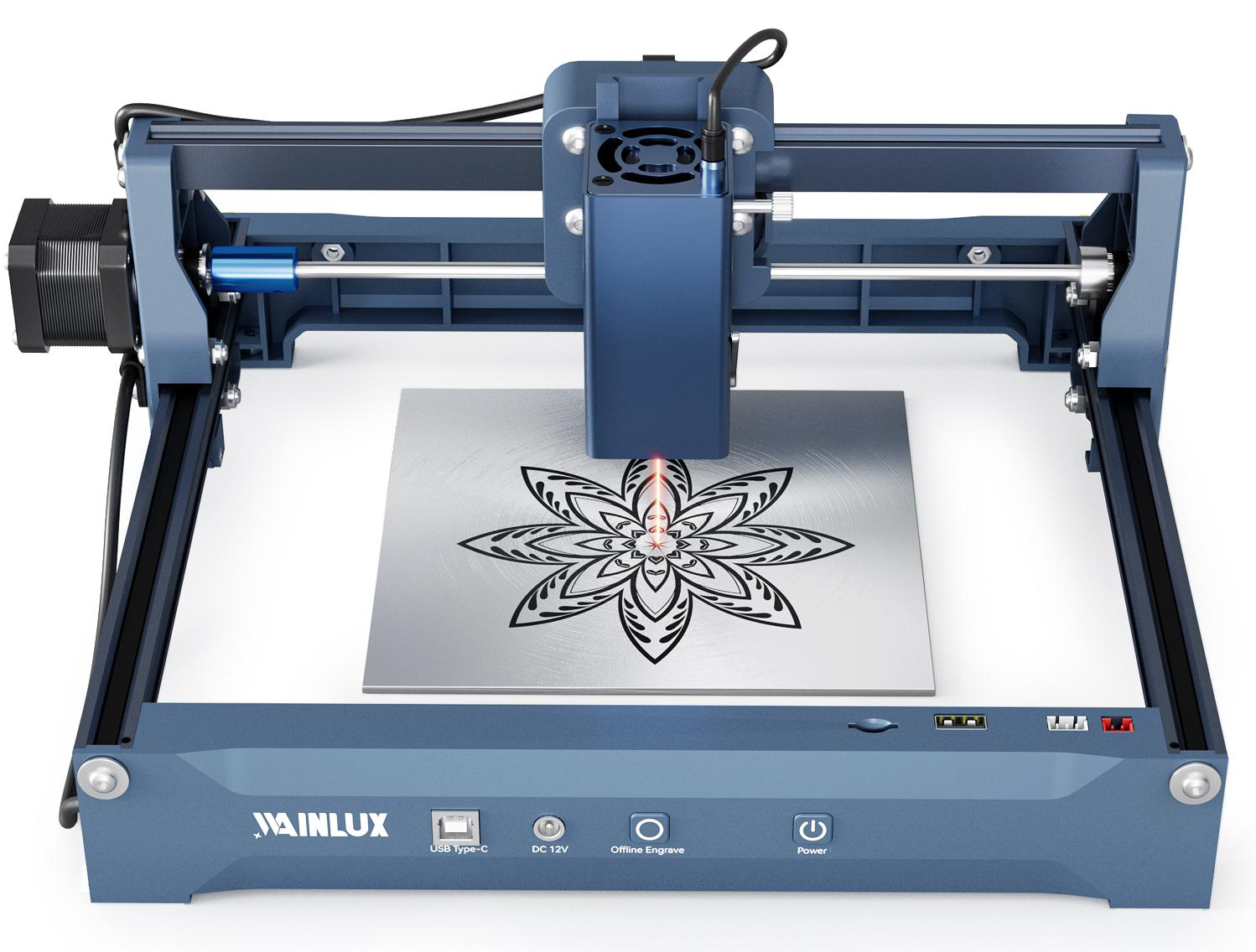
Seven practical checks B2B buyers should run before ordering from a laser engraving machine manufacturer, covering factory verification, engineering depth, QC, warranty and trade terms.
When buyers search for laser engraving machine manufacturers, they are usually past the browsing stage. They need a factory that can quote accurately, build consistently, and still answer the phone two years after the shipment lands. The machine itself is easy to compare on a spec sheet; the manufacturer behind it is not. This checklist gives you the seven checks we recommend before you place any order, based on the questions real B2B buyers ask us every week.
1. Confirm You Are Talking to the Factory, Not a Middleman
Trading companies and factories can both be legitimate partners, but the difference changes your price, your lead time and your warranty experience. Ask directly: Do you manufacture these machines in-house? Which models, and where? A real manufacturer can describe its production lines, R&D team and factory floor without hesitation. For example, Xiamen Spring Technology Co., Ltd. has manufactured thermal printers, laser engraving machines and heat press machines in Xiamen since 1998, with 12 production lines in an 11,000 m² factory — details any genuine factory can and should be able to state about itself.
2. Check Engineering Depth, Not Just Sales Depth
A catalog is easy to copy; engineering is not. Ask who designs the machines and who supports you when something behaves oddly. Useful evidence includes:
- An in-house R&D team and patent portfolio, not just an assembly line.
- OEM/ODM capability: custom branding, packaging, firmware or configuration on request.
- Engineer support per order — sample confirmation, technical testing, after-sales follow-up.
These show up in how quickly a supplier answers a technical question. Test this before ordering: send one specific question about wavelength, material compatibility or control software and time the response.
3. Match the Product Range to Your Business, Not to the Brochure
A serious manufacturer covers the wavelength and power range your customers will ask for. In practice that means both 455nm blue diode machines (wood, bamboo, acrylic, leather, coated metal, painted glass at 3W–40W) and 1064nm machines that mark bare metal — gold, silver, copper, aluminum, stainless steel and zinc alloy — cleanly and without smoke. Look at how the range is structured: compact desktop units such as the WAINLUX K8-1064nm for jewelers, large-format 30x30cm and 40x40cm machines for signage and batch work, and dual-laser combinations that cover non-metal and bare metal in one unit. A fragmented range is a warning sign; a structured one shows the factory understands applications.
4. Verify Quality Control and Certifications
Ask what happens between assembly and packing. A manufacturer that takes quality seriously can describe its process concretely: incoming material inspection, semi-product and finished-product testing, appearance checks before shipment. Then verify paperwork: quality management certification such as ISO9001, product compliance marks relevant to your market (CE, RoHS, 3C), and whether the certificate numbers can be provided on request. Certificates should be easy to produce; hesitation here is itself a finding.
5. Pin Down Warranty, Spare Parts and After-Sales
Laser machines are mechanical plus optical plus electronic. Things wear. Before ordering, get written answers to:
- What is the warranty period, and what does it cover? (Our policy: 1-year warranty for spare parts, with fault diagnosis by operation video and malfunction video for non-human damage.)
- How are spare parts supplied after the warranty period — and at what price?
- Who troubleshoots, and in what language, in what time zone?
6. Check Trade Terms Against Your Real Ordering Pattern
Manufacturer-direct does not only mean better unit prices; it means the factory can flex around how you actually buy. Confirm sample policy (1–5 units for samples is common), official order MOQ, payment terms (for example 100% prepayment on samples, 70/30 T/T on official orders), and realistic shipping timelines — same-day packing for in-stock machines, 5–9 business days DAP to forwarder warehouses, 12–15 business days air DDP internationally. A factory that quotes vague lead times for stock items is telling you something.
7. Order a Sample and Evaluate It Like Your Customer Would
Finally, buy one unit and run the jobs you actually sell: your materials, your artwork, your daily volume. Measure setup time, engraving consistency across a batch, and how the supplier behaves when you report an issue on the sample. The sample phase is the cheapest due diligence you will ever do.
Red Flags That Should Stop a Deal
- Refuses a video factory tour or third-party inspection.
- Cannot explain the difference between diode and 1064nm models beyond price.
- Warranty exists only in chat messages, never in the proforma invoice.
- Certificates are "available" but never quite attachable.
FAQ
Is a lower price from an unknown factory worth the risk?
Compare the full cost: machine + spares + downtime + communication overhead. A slightly higher factory-direct price with a 1-year parts warranty and same-day stock dispatch usually wins over a 12-month horizon.
Can manufacturers customize machines for our brand?
Established manufacturers offer OEM/ODM — branding, packaging and configuration. Confirm scope and any MOQ implications in writing before sample production.
What documents should a proper export order include?
At minimum: proforma invoice, commercial invoice, packing list, and tracking. Ask for these before payment; they are baseline trade documents, not favors.
Talk to the Factory
Xiamen Spring Technology Co., Ltd. manufactures the WAINLUX laser engraving line and welcomes OEM/ODM cooperation. Send your material list and target volume to [email protected] for a quotation, sample policy and current lead times.