
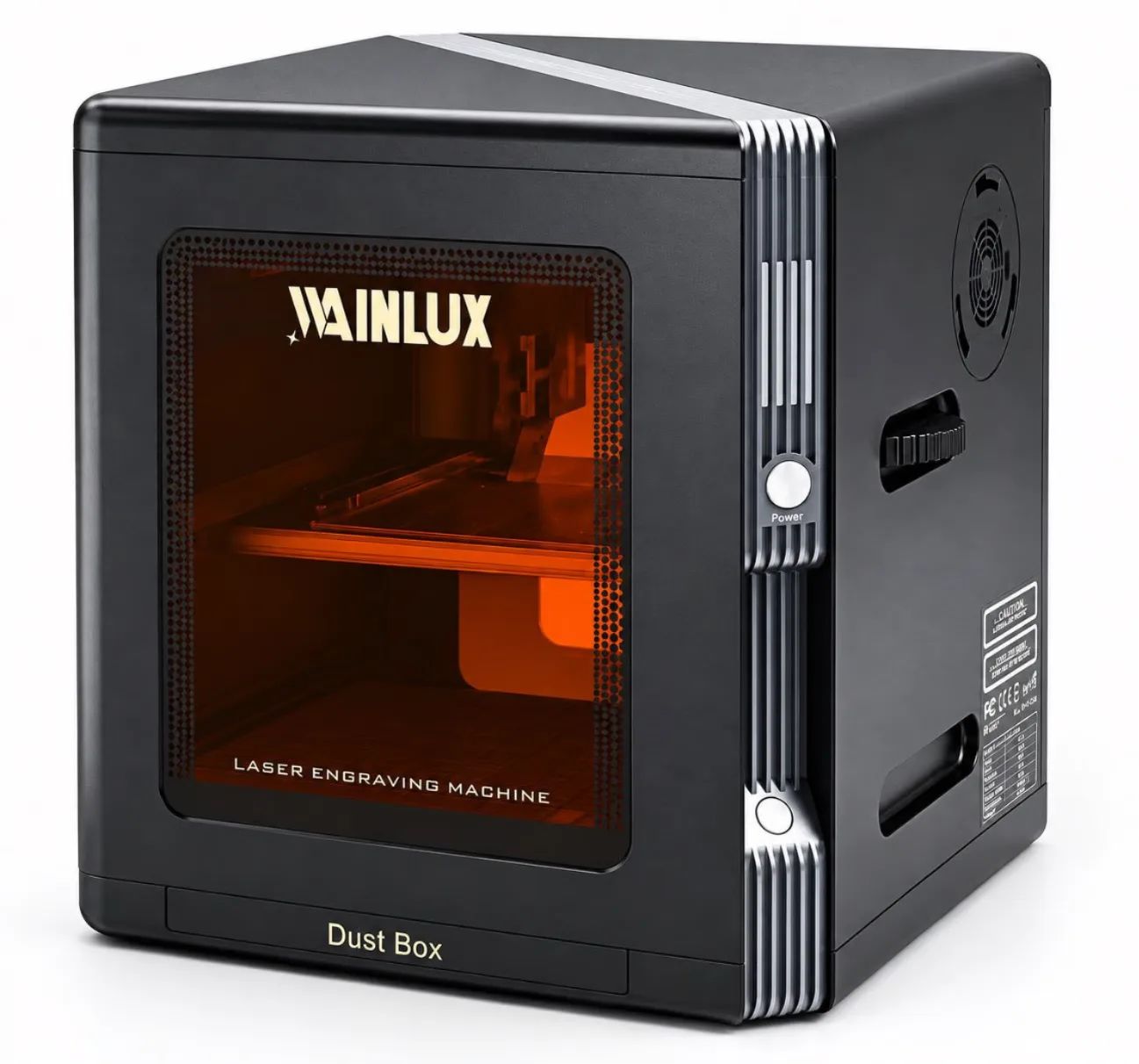
Buying a laser etcher for metal? Learn why wavelength (1064nm vs 455nm) decides whether you can mark bare metal, and how wattage only affects speed and depth. Includes specs, selection criteria, and FAQs.
Technical Explainer
Laser Etcher for Metal: Why Wavelength Beats Wattage
If you have tried to mark bare metal with a cheap diode laser, you already know the disappointment: the beam slides across the surface and leaves nothing but a faint smudge, or no mark at all. The problem is not that the laser is too weak. It is that the laser is the wrong color.
This article explains why wavelength, not wattage, determines whether a laser etcher for metal can mark gold, silver, copper, steel, or aluminum. We break down the two main wavelength classes (1064nm and 455nm), show how wattage actually affects performance, and give concrete specs to help you choose the right machine for bare-metal work.
Key takeaway: 1064nm infrared lasers are absorbed by bare metals and can mark them directly. 455nm blue diode lasers are absorbed by organic materials and coatings, so they can only mark metal by removing a painted or coated layer. Wattage affects speed and depth, but it cannot overcome a wavelength mismatch.
The Core Principle: Absorption Depends on Wavelength
Every material absorbs light differently depending on the light's wavelength. When a laser beam hits a surface, the material either absorbs the energy and heats up, changes color, or vaporizes, or it reflects the energy away. If the metal reflects the wavelength, the laser cannot mark it, no matter how many watts you push.
Bare metals like gold, silver, copper, steel, and aluminum are highly reflective at visible wavelengths. A 455nm blue diode beam bounces off bare metal almost like a flashlight beam off a mirror. At 1064nm, in the near-infrared range, the same metals absorb far more energy because their reflectivity drops significantly. That is why a 1064nm laser can mark bare metal directly, while a 455nm blue diode cannot.
This distinction matters because many inexpensive "metal engravers" on the market are actually blue diode machines. They work on painted metal, anodized aluminum, or coated steel because the beam removes the coating to reveal contrast. On bare metal, they fail, not because of insufficient power, but because the wavelength is wrong.
What Wattage Actually Does
Wattage is not irrelevant. Once you have the correct wavelength for the job, power determines how fast you can mark and how deep you can go. A higher-wattage laser can:
- Increase marking speed (measured in mm/s)
- Achieve deeper engraving (measured in mm)
- Reduce the number of passes required for a given depth
But wattage cannot change the absorption behavior of the material. A 5W blue diode will still not mark bare steel, while a 1064nm laser can. Wavelength decides feasibility; wattage decides efficiency.
1064nm vs 455nm: What the Specs Show
The table below compares the two main laser types used in desktop and light-industrial metal marking. The blue diode column reflects what a typical K10-5W spec sheet states: blue diode will not cut bare metal. The 1064nm columns reflect published specifications for WAINLUX models.
| Specification | Blue Diode (455nm) | 1064nm Laser |
|---|---|---|
| Wavelength | 455nm | 1064nm |
| Bare metal marking | No, only removes coatings | Yes, marks gold, silver, copper, steel, aluminum |
| Work area (example models) | Varies | 8x8cm (WAINLUX K8-1064nm); 15x20cm (WAINLUX X2-1064nm) |
| Accuracy | Varies | 0.01mm (WAINLUX K8-1064nm) |
| Engraving depth | Coating thickness only | 0.1 to 1mm (WAINLUX K8-1064nm) |
| Max speed | Varies | Up to 2000mm/s (WAINLUX K8-1064nm) |
| Materials (marking) | Painted or coated metal, some plastics | Bare and coated metals, wood, bamboo, leather, glass, acrylic |
Interpreting the Numbers
The 0.01mm accuracy figure means the laser can position the beam within 0.01mm on the work area. This matters for fine text, serial numbers, and detailed logos where legibility is critical. A 0.1 to 1mm depth range allows you to choose between surface marking (0.1mm) for a clean, precise look and deeper engraving (up to 1mm) for durability or tactile contrast.
Speed up to 2000mm/s applies when the laser is marking at shallow depths or on materials that require less energy. Deeper engraving or harder metals will require slower speeds to allow sufficient energy absorption. These are typical operating ranges, not guarantees for every material combination.
Two 1064nm Models for Different Work Areas
WAINLUX K8-1064nm (8x8cm Work Area)
The K8-1064nm is a compact 1064nm laser etcher for metal with an 8x8cm work area, well suited for small parts, jewelry, tags, and personalized items. It marks gold, silver, and copper, as well as steel, plus non-metals including wood, bamboo, leather, glass, and acrylic. Published specs include 0.01mm accuracy, 0.1 to 1mm engraving depth, and speeds up to 2000mm/s.
For detailed specifications, visit the WAINLUX K8-1064nm product page.
WAINLUX X2-1064nm (15x20cm Work Area)
The X2-1064nm is a larger-format 1064nm machine with a 15x20cm work area. It marks gold, silver, copper, iron, aluminum, stainless steel, and zinc alloy cleanly without smoke, making it suitable for larger plates, tools, and industrial components where a smoke-free mark is important for cleanliness or post-processing.
Both models use the same 1064nm wavelength, so both can mark bare metal. The choice between them depends primarily on the size of your typical workpiece and your required throughput.
How to Select a Laser Etcher for Metal: A Step-by-Step Checklist
Use the following steps to evaluate any laser etcher for metal before you buy. This checklist focuses on the technical criteria that determine whether a machine will actually work for your application.
- Confirm the wavelength. Ask the supplier for the laser wavelength in nanometers. If it is 1064nm, or another infrared range, it can mark bare metal. If it is 455nm, a blue diode, it cannot. If the supplier will not state the wavelength, treat it as a blue diode until proven otherwise.
- Identify your material and surface condition. Is the metal bare, painted, anodized, or coated? If bare, you need 1064nm. If painted or coated, a blue diode may be sufficient, but it will only remove the coating, not mark the underlying metal.
- Match the work area to your part size. Measure your largest typical part. The K8-1064nm offers 8x8cm; the X2-1064nm offers 15x20cm. A work area slightly larger than your part allows for positioning and fixture space.
- Check accuracy for fine detail. If your application involves small text, serial numbers, or intricate logos, look for accuracy figures in the 0.01mm range. Coarser accuracy may be acceptable for large, simple shapes.
- Determine required depth. Surface marking (0.1mm) is enough for visual contrast and readability. Deeper engraving, up to 1mm, provides tactile feel and durability. Confirm the machine's depth range matches your requirement.
- Verify speed for your throughput. Up to 2000mm/s is fast for shallow marking. If you need deep engraving on hard metals, expect to run slower. Ask the supplier for realistic speed expectations for your specific material and depth.
- Ask about smoke and debris. Some materials produce smoke during marking. The X2-1064nm is specified to mark certain metals cleanly without smoke, which can reduce post-processing. For other setups, consider ventilation.
- Confirm supplier support and documentation. Ask for the spec sheet, wavelength confirmation, and material test data. A supplier who provides these is more likely to support you after the sale.
Beyond Bare Metal: Multi-Material Capability
Many buyers need a laser etcher for metal that can also handle other materials. The K8-1064nm marks wood, bamboo, leather, glass, and acrylic in addition to metals. This multi-material capability means one machine can cover a range of jobs, from personalized gifts and industrial labels to leather goods and acrylic signage, without switching equipment.
Blue diode machines are often marketed for wood and leather as well, but their metal capability is limited to coated surfaces. If bare metal is part of your workflow, a 1064nm machine covers more ground.
Frequently Asked Questions
Can a 5W or 3W laser really mark bare metal?
Yes, if it is a 1064nm laser. Wavelength determines whether the metal absorbs the beam; wattage determines speed and depth. A 5W or 3W 1064nm laser can mark bare gold, silver, copper, steel, and aluminum, though higher wattage would allow faster marking or deeper engraving on the same materials.
Why do some sellers claim their diode laser engraves metal?
Many diode lasers can mark metal that has a painted, anodized, or coated surface. The laser removes the coating to create contrast, which can look like engraving. On bare metal, the same laser may leave no mark. Always clarify whether the claim applies to bare or coated metal.
What depth can I expect when marking bare metal with a 1064nm laser?
Published specifications for the WAINLUX K8-1064nm list a depth range of 0.1 to 1mm. The achievable depth depends on the specific metal, the number of passes, and the speed setting. For critical depth requirements, request test marks on your actual material.
Does a larger work area affect marking quality?
Work area and marking quality are separate specifications. The X2-1064nm offers a larger 15x20cm work area than the K8-1064nm's 8x8cm, but both use the same 1064nm wavelength and can mark bare metal. Choose based on part size and throughput, not on an assumption that larger means better quality.
Conclusion: Check the Wavelength First
When you evaluate a laser etcher for metal, the first question is not "how many watts?" It is "what wavelength?" A 1064nm laser can mark bare gold, silver, copper, steel, and aluminum directly, while a 455nm blue diode cannot, regardless of wattage. Once you have confirmed 1064nm, then compare wattage, work area, accuracy, depth, and speed to match the machine to your production needs.
WAINLUX, a brand of Xiamen Spring Technology Co., Ltd. (founded 1998, 25+ years in manufacturing, ISO9001 company-level certification, OEM/ODM available, exports to 50+ countries), offers both the K8-1064nm and X2-1064nm for bare-metal marking. If you are unsure which model fits your application, contact us with your material, part size, and required depth, and we can help you confirm the right configuration.