

The first decision when buying a small laser engraver for metal is surface type. Coated or anodised metal can be marked with a compact 455nm machine, while bare metal requires a 1064nm head. This article explains what each path means for size, budget and job range, then helps you decide between a dedicated unit and a compact dual-head system.
Buyer Guide
If you are searching for a small laser engraver for metal and working with limited bench space or a tight budget, the first question is not about power or brand. It is about what you are engraving on: a coated or anodised surface, or bare metal. That single difference determines which laser wavelength will actually mark your parts, and it channels you toward very different machines.
Key Takeaways
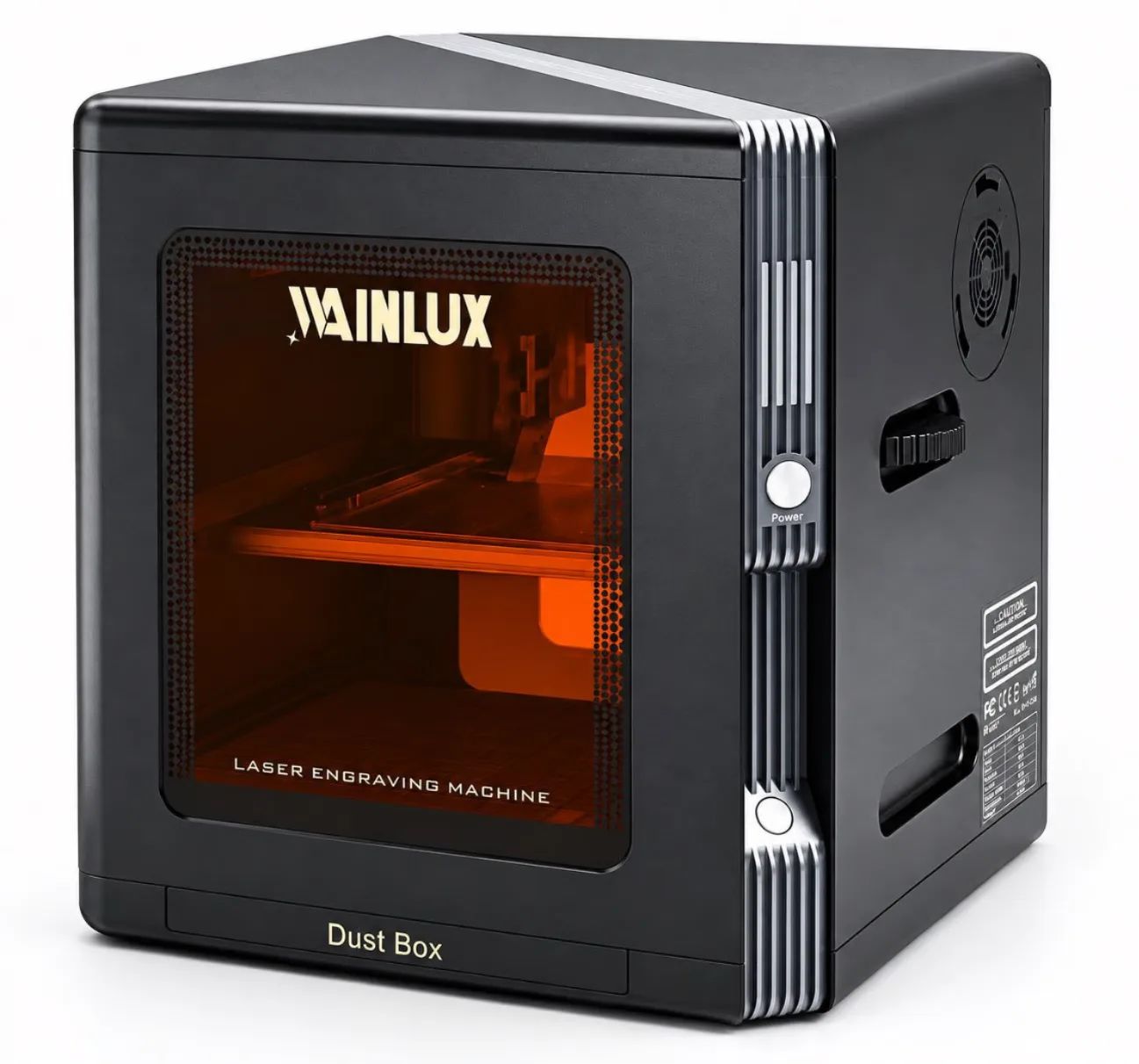
- Coated and anodised metals can be marked with a compact 455nm laser, typically at lower cost and smaller footprint.
- Bare metal requires a 1064nm laser head; 455nm light does not leave a durable mark on raw, uncoated surfaces.
- A dedicated single-head machine keeps the footprint and price down if your material type is fixed.
- A compact dual-head system lets you switch between coated and bare metal without buying two machines.
What This Article Covers
- Why surface type is the first decision
- Coated and anodised metal with 455nm
- Bare metal with 1064nm
- Comparing the two paths: size, budget and job range
- Single-head vs dual-head: a numbered decision guide
- Company background and inquiry
Why Surface Type Comes First
A laser engraver does not "cut through" or "burn into" metal the way many buyers imagine. It interacts with the surface. If that surface is a coating, anodised layer or paint, a lower-power visible-light laser can change the coating and create a visible, durable mark. If the surface is bare, polished or raw metal, the laser must interact with the metal itself, which calls for a different wavelength and usually more power.
This is not a marketing preference. It is a physical fork in the road. Buyers who skip this step often order a compact 455nm machine, then discover it will not mark their stainless steel tags or aluminium blanks. Buyers who jump straight to a powerful bare-metal machine sometimes pay for capability they do not need, because every part they mark is already powder-coated or anodised.
So before comparing prices or work areas, hold a sample of your actual production material in your hand and ask: is there a coating or anodised layer on the surface I intend to mark? The answer decides everything that follows.
Path One: Coated and Anodised Metal with 455nm
Many metal parts used in small-scale marking already have a surface treatment. Anodised aluminium nameplates, powder-coated steel tags, painted enclosures, coated business cards and colour-anodised components all fall into this group. On these surfaces, a 455nm blue-light laser can remove or alter the coating to expose a contrasting mark underneath.
A compact example is the XN001-3W. It uses a 455nm laser and provides a 9.8 x 8.8 cm working area. That area is small enough for desk or bench use, yet large enough for the kind of tags, plates and small components that this class of machine is built for. It is important to be clear about its scope: the XN001-3W marks coated metal only. On bare, uncoated metal it will not produce the same result.
What this path means for size
Because the laser module is relatively compact, machines in this class can be genuinely small. They fit on a workbench, a shelf or a rolling cart. There is no need for a separate chiller or a large enclosure. For a workshop or retail operation with limited floor space, this is a real advantage.
What this path means for budget
Lower power and a simpler optical path generally translate into a lower purchase price. If all your metal marking happens on coated or anodised stock, you can keep the budget focused on that single job instead of paying for bare-metal capability you will never use.
What this path means for job range
The trade-off is material range. A 455nm machine is not a general-purpose metal marker. It is a coated-metal marker. If a customer occasionally brings you bare stainless steel, you will need to decline that job or find another solution. If your production is stable and the surface is consistent, this limitation may never affect you.
Path Two: Bare Metal with 1064nm
Bare metal includes raw stainless steel, uncoated aluminium, brass, copper, tool steel and similar surfaces without a coating or anodised layer. To mark these, you need a 1064nm laser head. This wavelength is absorbed by the metal surface itself, allowing the machine to create a mark through controlled interaction with the material rather than merely removing a coating.
The F1-10W+1064nm is a compact dual-head system that pairs a 455nm 10W head with a 1064nm head in a 10 x 10 cm working area. The 1064nm head is the part that handles bare metal. The 455nm head remains available for coated materials, which is why this machine sits at the centre of the single-head versus dual-head decision.
For buyers who want a dedicated bare-metal machine, the K8-1064nm is a single-purpose 1064nm unit. It offers an 8 x 8 cm working area, 0.01 mm precision, a marking depth range of 0.1-1 mm, speeds up to 2000 mm/s and a weight of 4.4 kg. Those specifications describe a machine built to put durable marks directly onto bare metal, not to handle coated surfaces.
What this path means for size
A 1064nm laser head and its supporting optics are larger and heavier than a simple 455nm module. The K8-1064nm weighs 4.4 kg, which is still portable but noticeably more substantial than an entry-level coated-metal unit. If your workbench is genuinely tiny, measure before you commit.
What this path means for budget
Bare-metal capability costs more than coated-metal marking. The laser source, optics and control electronics are more demanding. Buyers should expect a higher entry price for a 1064nm machine than for a 455nm-only unit of similar working area.
What this path means for job range
The reward is range. A 1064nm head can mark bare metal directly, which opens up stainless tags, aluminium blanks, brass components, tool marking and similar work. The 0.1-1 mm depth range on the K8-1064nm also means the mark is not merely a surface discolouration; it has measurable depth. If your customers ask for permanent part identification on raw metal, this is the path that delivers it.
Buyer tip: Before ordering any small laser engraver for metal, send the supplier a photo of your actual part and state whether the surface is coated, anodised or bare. If you are unsure, ask them to confirm which wavelength is appropriate. Guessing here is the most common and most expensive mistake in this category.
Comparing Coated Marking versus Bare Metal Needs
The table below summarises the practical differences between the two paths. Use it as a quick reference when matching your material to a machine type.
| Decision Factor | Coated or Anodised Metal (455nm) | Bare Metal (1064nm) |
|---|---|---|
| Typical surfaces | Anodised aluminium, powder-coated steel, painted enclosures, coated tags | Raw stainless steel, uncoated aluminium, brass, copper, tool steel |
| Laser wavelength | 455nm | 1064nm |
| Example compact unit | XN001-3W (9.8 x 8.8 cm area) | K8-1064nm (8 x 8 cm area, 4.4 kg) |
| Marking depth | Coating removal; depth not specified for this class | 0.1-1 mm |
| Precision | Depends on model | 0.01 mm |
| Speed | Depends on model | Up to 2000 mm/s |
| Footprint and weight | Smaller and lighter | Larger head; K8-1064nm at 4.4 kg |
| Relative budget | Lower entry cost | Higher entry cost |
| Job range | Coated metal only | Bare metal directly |
Single-Head or Dual-Head: How to Decide
Once you know your surface type, the next question is whether to buy a dedicated machine or a compact dual-head system. A dual-head machine carries both a 455nm head and a 1064nm head, so it can handle coated and bare metal without a second purchase. The trade-off is cost, size and complexity. Work through the following steps in order.
- List every metal surface you expect to mark in the next 12 months. If every item is coated or anodised, a 455nm machine such as the XN001-3W covers the job. If any item is bare metal, you need a 1064nm head in the mix.
- Decide whether bare-metal work is core or occasional. If bare metal is a regular production requirement, a dedicated 1064nm machine such as the K8-1064nm keeps the process simple. If it is occasional and you also mark coated parts, a dual-head machine avoids switching between two units.
- Check your available working area. The XN001-3W offers 9.8 x 8.8 cm, the K8-1064nm offers 8 x 8 cm, and the F1-10W+1064nm offers 10 x 10 cm. Match the area to the largest part you need to mark without repositioning.
- Consider whether you need a larger dual-laser bed. If your parts are bigger or you want more room around the workpiece, the X1-20W dual-laser covers 30 x 30 cm and uses 20W of power. It is a larger machine for buyers whose work has outgrown a compact bed.
- Weigh the convenience features you will actually use. The F1-10W+1064nm includes WiFi and a built-in screen, which can simplify operation if you do not want to tether the machine to a computer for every job.
- Confirm the total cost of ownership, not just the sticker price. A dual-head machine costs more up front than a single-head unit, but it may replace two separate purchases. If you would otherwise buy a 455nm machine and a 1064nm machine, compare the combined cost against one dual-head system.
- Match the machine to your operator and environment. A compact 455nm unit is the simplest to place and operate. A 1064nm or dual-head machine brings more capability but also more weight and setup consideration. Choose the smallest machine that fully covers your confirmed material list.
How a Dual-Head System Fits a Small Workshop
The F1-10W+1064nm is the clearest example of the compact dual-head approach. It pairs a 455nm 10W head with a 1064nm head inside a 10 x 10 cm working area. For a small workshop that receives both anodised tags and bare stainless parts, this means one machine on the bench instead of two. The WiFi connection and built-in screen are practical additions when bench space is tight and a separate computer is inconvenient.
If your production has grown beyond a compact bed, the X1-20W dual-laser covers 30 x 30 cm. That larger area suits buyers who need to mark bigger panels or multiple small parts in one pass without repositioning. It uses a 20W laser, placing it above the compact class in both capability and footprint.
What to Confirm Before You Buy
Three details decide whether a small laser engraver for metal will do what you need. First, the exact surface of your parts: coated, anodised or bare. Second, the largest single dimension of the parts you mark, so the working area is not too small. Third, the required mark depth, because a coating-removal mark and a 0.1-1 mm engraved mark are different outcomes.
If you cannot answer these from your own production data, ask the supplier to review a sample photo or drawing. A machine that matches your surface type and part size will outperform a more powerful machine that does not.
About the Manufacturer
WAINLUX has been manufacturing laser equipment since 1998, with more than 25 years of production experience. The company holds an ISO9001 company-level certificate and offers OEM and ODM services. Its products are exported to more than 50 countries. Buyers looking for a compact metal engraving machine can request configuration details and confirm which model matches their surface type and working area.
Not sure whether your metal parts need a 455nm or 1064nm machine? Send us a photo of your part and its surface type. We will confirm the right model and working area for your job.