
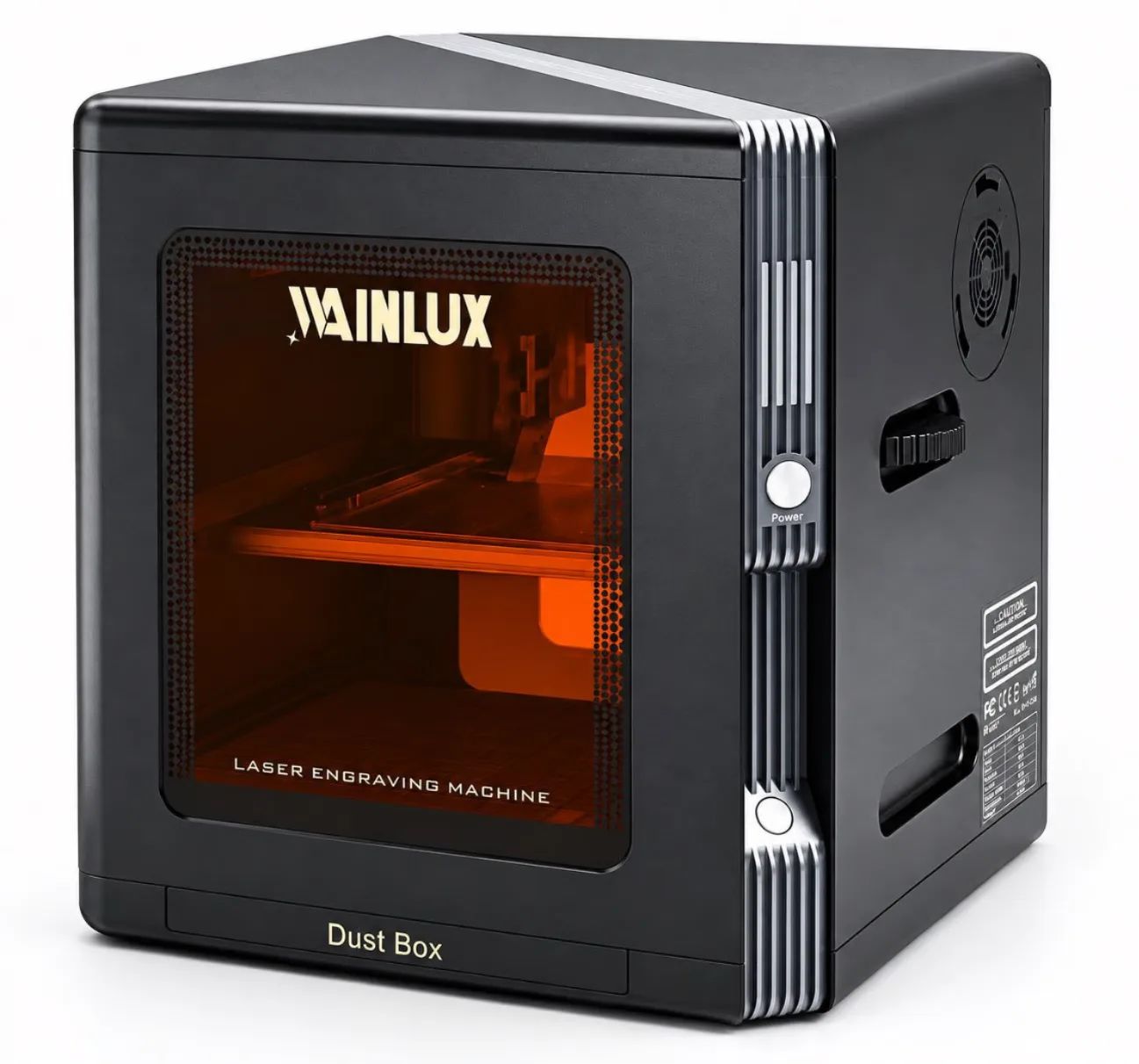
Choosing a steel engraving machine comes down to one question: does your process require marking bare steel, or can you apply a coating first? This guide compares diode and 1064nm laser approaches by steel form factor and mark type, with a practical decision checklist for shop owners and buyers.
Start With the Steel, Not the Machine
If your shop already finishes steel parts and needs a mark that stays after cleaning, the wrong laser costs more than the right one. The core question is simple: will you mark bare steel, or can you apply a coating first? Blue diode lasers cannot mark bare steel. That single line of physics redirects the whole buying decision.
This guide is for shop owners and buyers comparing a diode laser against a 1064nm steel engraving machine. The decision comes down to the steel itself: its form factor, its surface state, and the mark you need.
- Blue diode lasers cannot mark bare steel — they require a pre-blackened surface.
- A 15x20cm diode machine can engrave stainless steel only after blackening; the same work area in 1064nm marks bare steel.
- 1064nm wavelength is well absorbed by metal, vaporizing the surface without smoke.
- Mark type drives the choice: paint-mark versus bare-metal depth.
Why Wavelength Decides What You Can Mark
The 1064nm wavelength is well absorbed by metal. That absorption is what allows direct surface marking on structural materials. When the beam reaches the steel, energy is absorbed at the surface and the material is vaporized without smoke. The mark sits in the metal itself, not on top of a coating.
Blue diode light behaves differently. It does not couple efficiently into bare steel, so no meaningful mark appears. The workaround is to coat the surface first: apply a blackening agent to stainless steel, let it cure, and then the diode laser can engrave into that layer. This is a real, repeatable process — not a laser that refuses to work, but a laser that needs a prepared surface.
Neither approach is wrong. They answer two different production questions: can I add a coating step, or do I need to mark the metal as it is?
Match the Machine to Your Steel Form Factor
Different steel forms present different marking problems. The table below shows how the two approaches line up against common form factors and mark types.
| Steel Form | Blue Diode | 1064nm | Best Fit |
|---|---|---|---|
| Bare stainless sheet (finished) | No mark on bare steel | Direct surface mark | 1064nm |
| Stainless with blackening applied | Engraves the blackened layer | Also compatible | Diode if coating is already in your process |
| Gold, silver, copper, iron, aluminum, zinc alloy | Surface-dependent | Marks by vaporizing surface | 1064nm |
| Opaque acrylic and hard plastics | Limited | Supported | 1064nm |
| Small detailed marks on steel | Needs cured coating for contrast | Direct, controlled depth | Depends on depth spec |
Two WAINLUX models map onto this table. The X2-10W is a blue diode machine with a 15x20cm work area; it engraves stainless steel only after the surface is blackened. The X2-1064NM has the same 15x20cm work area, but at 1064nm it marks gold, silver, copper, iron, aluminum, stainless steel, and zinc alloy by vaporizing the surface without smoke, plus opaque acrylic and hard plastics.
For shops working in a smaller footprint, the WAINLUX K8-1064nm laser engraving machine has a published 8x8cm work area, 0.01mm accuracy, 0.1–1mm depth, and 2000mm/s speed, marking gold, silver, copper, and steel.
When a Diode Machine Still Makes Sense
A diode steel engraving machine is not obsolete. It fits a specific workflow:
- Your parts are small and you already spray or wipe a blackening compound as part of finishing.
- The mark is decorative or high-contrast text on a coating, not a deep structural mark.
- You want one machine that handles wood, leather, and coated metal in the same session.
- Your budget and bench space favor a smaller, lighter unit.
The trade-off is the added coating step and its cure time. If a customer requires the mark to survive a wash or abrasion that removes the blackened layer, the diode mark goes with it.
When You Need 1064nm
Choose a 1064nm machine when any of the following applies:
- The steel arrives bare and finished. You will not add a coating.
- You mark multiple metals in the same shop — copper, brass, aluminum, zinc alloy, and steel.
- You need controlled depth (the K8-1064nm lists 0.1–1mm) rather than a surface color change.
- You also mark opaque acrylic or hard plastics and want one machine to cover both.
- You want a smoke-free vaporizing process that keeps the part clean.
Decision Checklist for Your Shop
Work through this list before you request a quote. Each answer points to one approach.
- Is the steel bare, or coated? If bare and finished, 1064nm is the direct fit.
- Can your process absorb a blackening and cure step? If no, rule out blue diode for steel.
- Do you mark more than steel? Metals like copper, aluminum, and zinc alloy favor 1064nm.
- Do you need depth control, or is a surface mark enough? Published depth specs narrow the field.
- What is your maximum part size? Match it to the work area (15x20cm or 8x8cm in the models above).
- Will the mark face washing or abrasion? A mark in bare metal survives; a coating mark may not.
- Do you also cut or mark acrylic and hard plastics? 1064nm covers those in the same platform.
- What accuracy does your smallest mark require? Check the published accuracy figure against your detail.
Frequently Asked Questions
Can a blue diode laser mark bare steel at all?
No. Blue diode lasers cannot mark bare steel. They engrave stainless steel only after the surface is blackened, which gives the beam a layer to absorb into.
Is a 1064nm machine only for steel?
No. The WAINLUX X2-1064NM marks gold, silver, copper, iron, aluminum, stainless steel, and zinc alloy, plus opaque acrylic and hard plastics. The K8-1064nm marks gold, silver, copper, and steel.
Why does 1064nm mark metal without smoke?
The 1064nm wavelength is well absorbed by metal. The beam vaporizes the surface rather than burning a coating, so the process does not produce the smoke associated with coating-based marking.
What depth can I expect on steel?
The K8-1064nm lists a depth range of 0.1–1mm. That figure is the published specification for that model; confirm the depth you need against your own material and mark sample before committing.
Which machine fits a small shop bench?
The K8-1064nm has an 8x8cm work area, 0.01mm accuracy, and 2000mm/s speed. The X2-10W and X2-1064NM both offer a larger 15x20cm work area if your parts are bigger.
How to Get a Straight Answer From a Supplier
When you request a sample or quote, send three things: the metal and its surface state (bare or coated), the size of your largest part, and whether the mark must survive abrasion or cleaning. With those three answers, the diode-versus-1064nm question usually resolves itself before you compare prices.
Xiamen Spring Technology Co., Ltd. has manufactured laser equipment since 1998 and exports to 50+ countries under ISO9001 company-level certification, offering OEM/ODM support. If you are comparing a diode laser against a 1064nm steel laser engraving machine for your shop, send your steel form factor and mark requirement for a recommendation.