
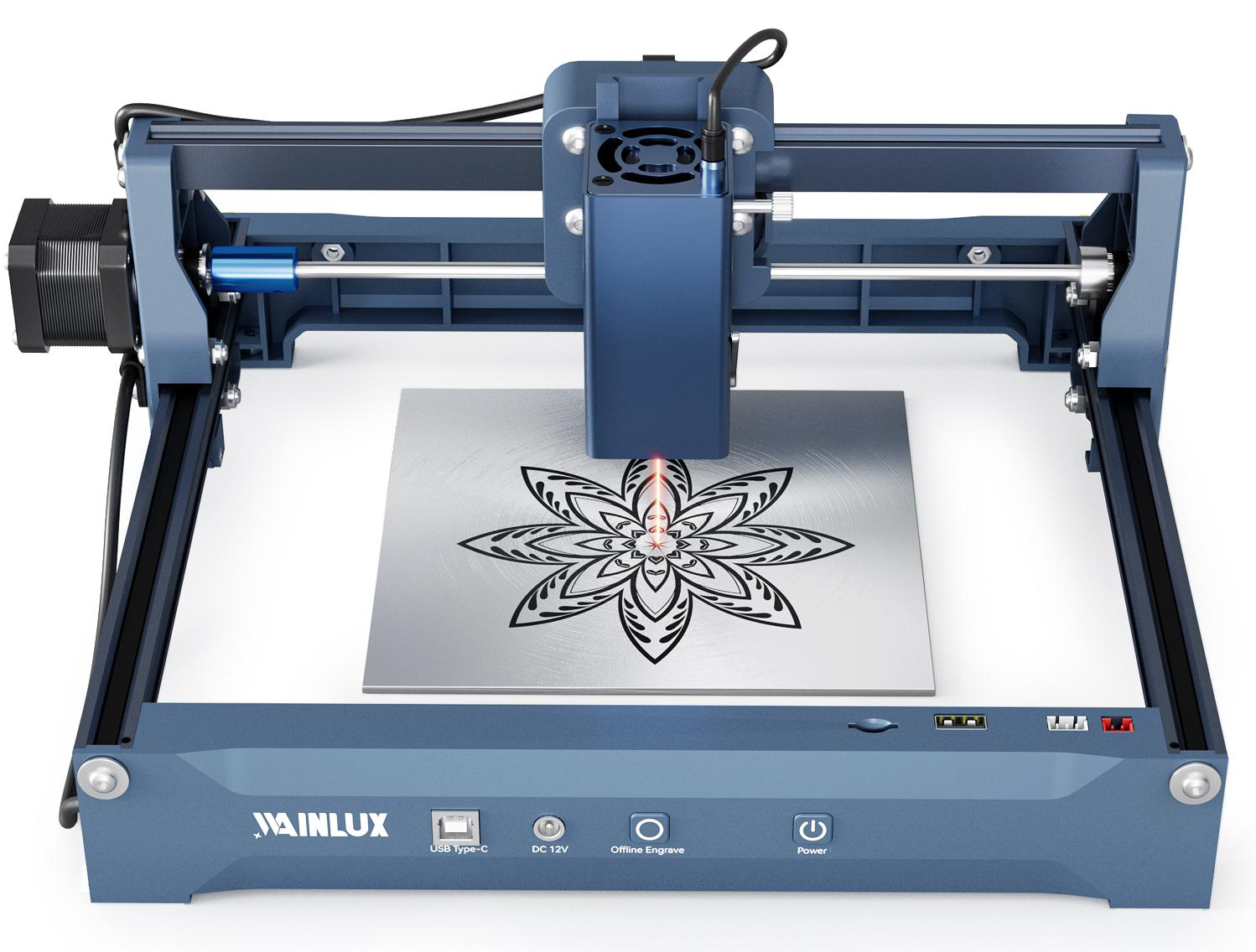
A 20W diode laser is a different machine from a 40W one. This article explains what 20W can realistically cut on a single pass, where the limits show up, and when stepping up to 40W makes more sense than slowing down. Includes a spec comparison of the WAINLUX L8-20W, L8-40W, and X1 dual-head platform.
If you are comparing 20W diode laser engravers, the first question is not which brand cuts the most. It is whether 20W is the right power class for the material you actually sell or produce. A 20W machine and a 40W machine can share a frame, a controller, and a price bracket close enough to confuse the spec sheet — but they behave differently once you push past thin stock. This article sets out what a 20W diode laser realistically cuts in practice, where its limits appear, and when a 40W upgrade is the more economical decision.
Key Takeaways
- A 20W blue diode laser cuts thin-to-medium wood and sheet goods that most workshop and signmaking buyers already work with.
- Published cut figures are single-pass reference values for a specific machine and material — treat them as a starting point, not a universal guarantee.
- Beyond the 20W range, slower passes usually cost more time than a 40W machine saves in money.
- The WAINLUX L8-20W and L8-40W share one platform, so you can match power to material without relearning the whole workflow.
What 20 Watts Actually Means on a Diode Laser
The “20W” in a machine name refers to optical output power at the laser module, delivered as a 455nm blue diode beam. That wavelength is well absorbed by organic materials — wood, paper, leather, some coatings — and less absorbed by bare metals. This is why a 20W diode machine is a natural fit for wood and craft production, and why metal work is usually handled by a separate infrared module rather than the blue diode itself.
Power alone does not determine what a laser can cut. Material thickness, density, glue content, pass count, and air assist all change the result. A reputable supplier will quote figures “single pass” and specify the material — because those are the numbers a buyer can actually compare.
What a 20W Laser Can Cut in Practice
On the WAINLUX L8-20W, the published cutting reference is 12mm plywood and 15mm pine in a single pass. Those are the figures to use when planning jobs: they tell you the machine reaches into the low-teens thickness range on common soft woods and engineered sheet, which covers a large share of signage, craft, model-making, and small-batch furniture work.
Engraving is where a 20W diode machine is at its best. Because engraving removes or darkens material only at the surface, throughput is high and detail is limited mainly by focus and motion quality, not by raw power. For a workshop whose mix is mostly engraving with occasional cutting up to around these thicknesses, 20W is a sensible operating point.
Where 20W Stops Being Comfortable
- Thicker solid hardwood or dense plywood. Once you move past the published single-pass range, the machine can still work, but you are now trading time and multiple passes for a result single-pass power would give more cleanly.
- Production runs with no margin for slow jobs. If every part is a thick cut, total machine time becomes the bottleneck, not the cutter head.
- Metal marking or cutting. A 455nm blue diode is not the tool for this; check whether the model offers a separate infrared head for the metal work you need.
When to Step Up to 40W
The WAINLUX L8-40W uses the same platform as the L8-20W, and its published single-pass figures rise to 15mm plywood and 20mm pine. That is roughly the next thickness band up. The practical reason to choose it is not “more power is better” — it is that your routine jobs sit outside what 20W cuts cleanly in one pass, and you would rather not build the schedule around repeated passes.
As a rule of thumb: if most of your work is engraving and cutting under roughly the 20W range above, a 20W machine is the better fit and typically the more economical one. If a meaningful share of your jobs falls at the upper end of that range or beyond, the 40W version usually pays for the difference in saved machine time. It should be confirmed against your own material samples — suppliers can normally cut test pieces on request.
Platform Comparison: L8-20W, L8-40W, and X1 Dual
The table below uses only the published specifications for these three machines. It is intended to help you match a machine to a material mix, not to rank them against each other — they serve different jobs.
| Model | Laser source | Working area | Published single-pass cut | Best suited to |
|---|---|---|---|---|
| WAINLUX L8-20W | 455nm blue diode, 20W output | 40 × 40 cm | 12mm plywood, 15mm pine | Engraving-led work with cutting up to this band |
| WAINLUX L8-40W | 40W | 40 × 40 cm (same platform) | 15mm plywood, 20mm pine | Cutting-heavier production, thicker stock |
| WAINLUX X1 dual | 20W diode head + 1064nm metal head | 30 × 30 cm | Wood per 20W diode head; metal via 1064nm head | Mixed wood and metal marking/cutting |
The X1 dual addresses a different problem: it pairs the 20W diode head with a 1064nm head for metal work, so a workshop handling both wood and metal can do it on one machine rather than two. Its working area is 30 × 30 cm, smaller than the L8 platform, which is worth weighing if you regularly cut large panels. More detail is available on the WAINLUX X1 20W + 1064nm dual laser engraving machine product page.
Practical Buying Checks
Before ordering any 20W laser engraver, work through the following with the supplier:
- Cut tests on your own material. Send a sample of the exact thickness and species you use. Push the supplier for single-pass figures, not “maximum cut” figures that hide repeated passes.
- Accessories that affect cut quality. The L8-20W ships with an air pump and honeycomb board — both matter for clean cutting and edge quality. Confirm what is included rather than assumed.
- Connectivity and operation. The L8-20W supports PC, Bluetooth app, and offline operation, with tilt protection. Check that the control path matches how your operators actually work.
- Support and parts. Ask about lead time, spare modules, and technical support in your region. For OEM/ODM projects, confirm tooling and branding terms in writing.
About the Supplier
WAINLUX machines are manufactured by Xiamen Spring Technology Co., Ltd., founded in 1998. The company holds ISO9001 certification at company level, offers OEM and ODM services, and exports to 50+ countries. These facts describe the supplier’s operating profile; they are the kind of hard details a buyer should verify directly when evaluating any laser supplier.
FAQ
Is 20W enough for cutting 10mm plywood?
Yes, within the published single-pass range. The WAINLUX L8-20W is rated to cut 12mm plywood in one pass, so 10mm is inside its stated capability. Actual results depend on the plywood’s glue content and density — always test your own stock.
Can a 20W laser cut metal?
A 455nm blue diode head is designed for organic materials, not bare metal. Metal work requires a separate infrared (1064nm) head, as found on the WAINLUX X1 dual. Confirm the specific metal and thickness you need with the supplier.
Should I buy 20W or 40W?
Match it to your schedule, not to the spec sheet. If most jobs sit inside the 20W cut range and are engraving-heavy, 20W is usually the better fit. If thick cutting dominates and multi-pass time is a problem, the 40W version on the same platform is worth the step up.
Do the L8-20W and L8-40W use the same accessories?
They share the same platform and 40 × 40 cm working area. Confirm the exact included accessories and spare-part compatibility with the supplier for the configuration you order.
To move from specification to a decision, the practical next step is a cut test: send your material sample, ask for single-pass figures, and confirm accessories, lead time, and support terms in writing. That comparison will tell you more than any power rating on its own.