
A purchase-decision checklist for overseas buyers choosing between a compact tee shirt press machine and a commercial heat press. Covers build and duty cycle, platen size and press type, power and heating range, certifications, and supplier evaluation for importers.
Buyer's guide
Commercial Heat Press: How to Choose the Right Machine
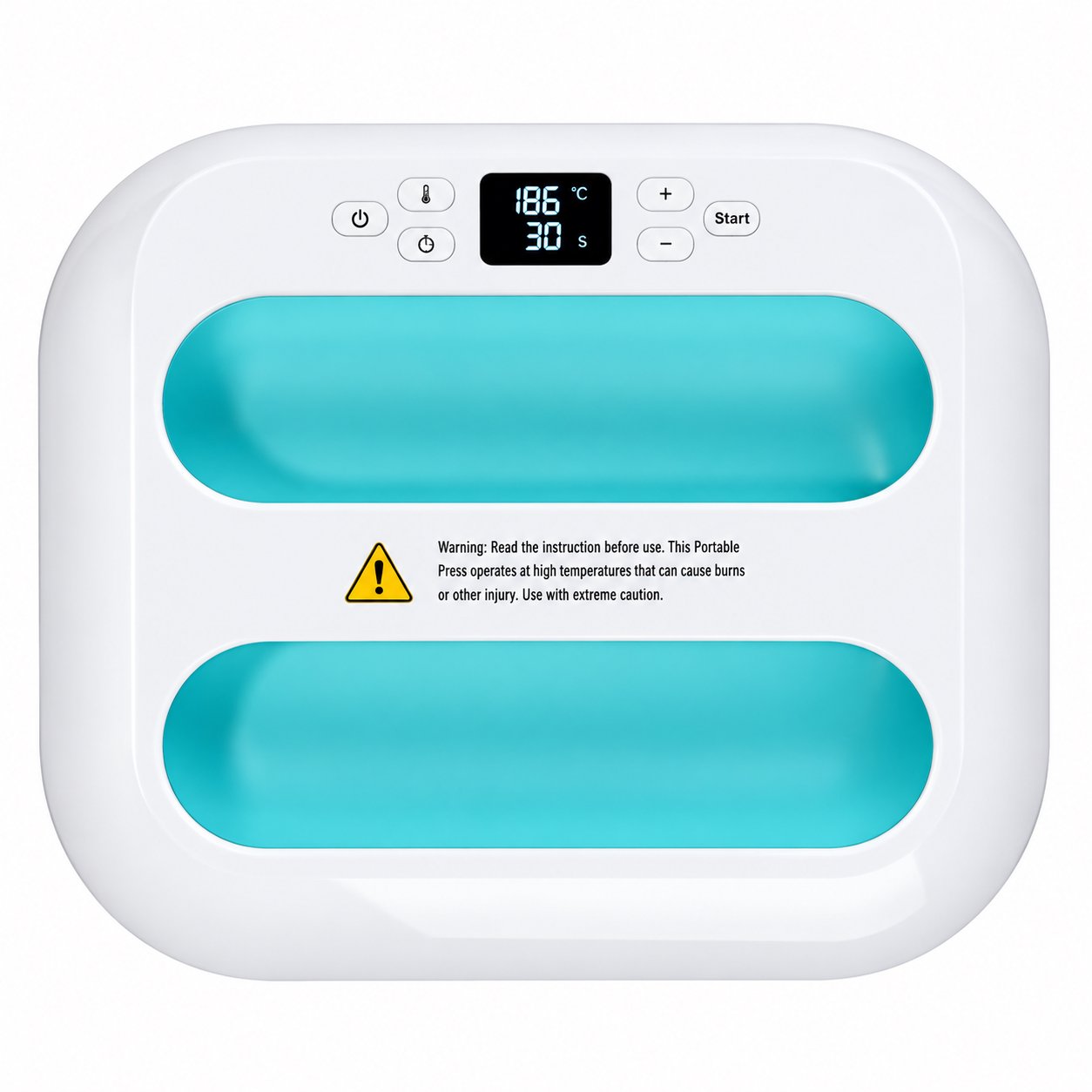
Most buyers arrive at this decision through a real order: a run of full-front shirts, a batch of caps and patches, or a mix that changes week to week. The question behind the search is usually the same — what separates a compact tee shirt press machine from a commercial heat press built for daily production, and which one should I buy for the stage my business is actually at?
This guide organises the decision the way a print shop or apparel decorator actually makes it: by business stage, by the work going on the platen, and by what the machine's build and specifications tell you before you ever plug it in. It also covers what an importer should check on the supplier side, because the machine and the factory behind it decide very different things about your risk.
- Match the machine class to your order pattern first; duty cycle, platen size, power and the certifications that come with the unit all follow from there.
- Platen size should be chosen by the largest single transfer you run, not by the biggest substrate you might one day accept.
- A stable, adjustable temperature range signals a press designed for repeatable production rather than one-off craft use.
- For importers, supplier documentation and OEM/ODM terms matter as much as the unit price.
What makes a press commercial
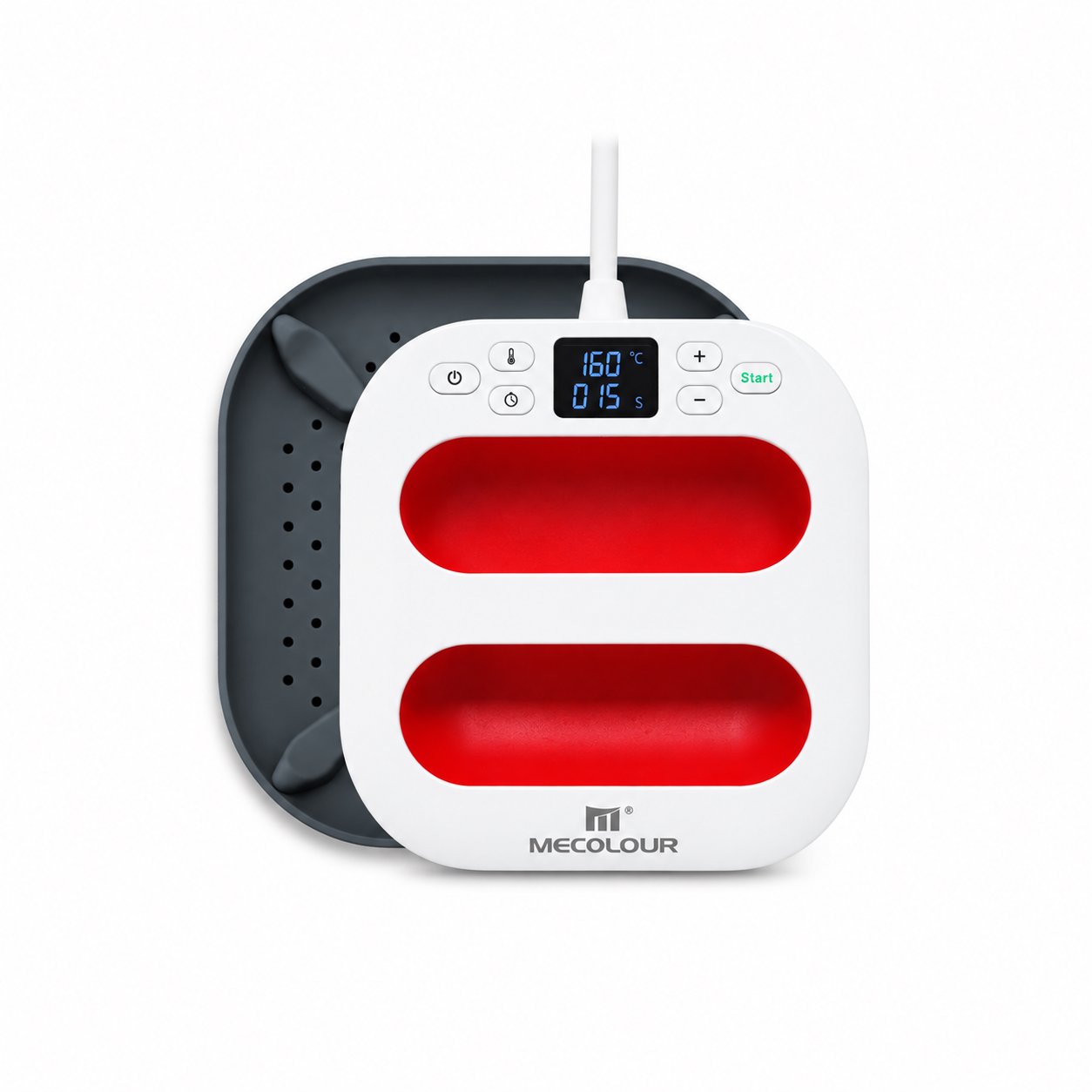
The word "commercial" is used loosely online, so it helps to fix it to observable features instead of marketing language. Four things separate a press built for daily production from one built for occasional use.
Build and duty cycle
A press intended for production is designed to run all day without losing temperature or pressure between cycles. That shows up in the frame stiffness, the consistency of the clamping force, and how the heating plate behaves after hours of use. A small-shop unit is a perfectly good machine — it is simply built around shorter, more interrupted sessions. When buyers ask which is the best heat press for small business use, the honest starting point is how many hours a day it will actually run, because that is what the duty cycle is being asked to deliver.
Heating plate and temperature control
Production presses pair a stable heating element with a controller that holds the setpoint. The reliability signal here is not the top temperature printed on the box — it is whether temperature is adjustable across a range and holds its setting while you work. A press that only offers fixed presets suits repetitious single-product work; a press with an adjustable range suits a decorator running different substrates on the same day.
Platen size and pressure mechanics
Platen size decides which transfers you can lay down in one pass, and the pressure mechanism decides whether that transfer is even. A larger platen is heavier and usually needs a stiffer frame, which is one reason full-front garment work moves you into a different machine class altogether.
Power and electrical fit
Power draw tells you both what the machine is capable of and what your workspace must support. A compact press can run on a modest supply; a full-front production press needs more. Before ordering, confirm the voltage and plug configuration for your country with the supplier, because this is one specification that is easy to assume and expensive to correct after the container ships.
Matching platen size and press type to the work
This is the part buyers most often get wrong, and it is worth slowing down on. Two rules keep the decision simple: choose the platen by your largest single transfer, and choose the press type by the shape of the substrate.
If your work is small transfers, patches or caps, a compact plate is not a compromise — it is the correct tool, and it can reach into confined areas that a large platen cannot. If your work is full-front t-shirt graphics, you need a platen that covers the print area in one placement, with the even pressure that a full-front panel demands.
Xiamen Spring Technology Co., Ltd. builds presses across these classes, which makes the range easier to see side by side:
| Model | Platen / plate | Power | Temperature | Best-suited work |
|---|---|---|---|---|
| SPRING C02 mini heat press | 4.17 x 2.44 in | 180W / 250W | Presets 140 / 160 / 190°C | Small transfers, sample and detail work; CE / ROHS / FCC |
| SPRING C08 compact press | 5 x 7 in | — | — | Small transfers, caps, patches; CE / ROHS / FCC |
| SPRING C03 clamshell press | 9 x 9 in | 900W / 1000W | 85–205°C | Mid-size garment graphics and mixed substrates; CE / ROHS / FCC |
| SPRING C05 press | 12 x 10 in | 1250W / 1350W | — | Full-front t-shirt work; CE / ROHS / FCC |
| SPRING C10 press | 12 x 10 in | 1200W | 100–205°C | Full-front garment and sublimation work; CE / ROHS / FCC |
The C02, C08 and C03 are the practical starting points for a decorator who is moving from craft work into steady small-batch production. The C05 and C10 are the step up when full-front garment printing becomes the core of the order book. If the frames and clamping force suit the work, the decision really does come down to plate size, temperature range and the power your space can supply.
Power and temperature range as reliability signals
Buyers tend to shop by headline numbers, but the useful signals are narrower than that. Two specifications tell you more about a press than any picture of it.
Temperature range and adjustability. A press that holds a setpoint across a working range is built for different materials, because different substrates and transfer films need different temperatures. Compare the C02's fixed presets at 140, 160 and 190°C with the C03's 85–205°C range or the C10's 100–205°C range. Presets suit a shop running one product line repeatedly; an adjustable range suits a shop that changes what it prints. Neither is automatically better — they serve different order patterns.
Power draw relative to plate size. A larger plate needs more power to reach and hold temperature across its full surface. A 12 x 10 inch press drawing 1200W to 1350W is a different electrical proposition from a 250W mini press, and that gap is the direction of a real, physical difference in what the machine can do continuously. Confirm the circuit available in your workspace and ask the supplier to match the machine's electrical configuration to your market before you commit.
What you are looking for is consistency. A press that reaches its setpoint quickly but drifts between cycles will cost you rejected garments, and rejected garments cost more than any difference in unit price.
Certifications and supplier evaluation for importers
If you are sourcing a hot press machine for shirts to resell or to equip a production floor, the machine is only half the purchase. The other half is the supplier's ability to deliver the same unit, with the same documentation, more than once.
Certifications to confirm in writing
Certification is where an importer's risk concentrates. Ask which certificates apply to the specific model you are ordering, and request the documents rather than accepting a logo on a listing. The SPRING models above are listed with CE, ROHS and FCC marks. On the factory side, Xiamen Spring Technology Co., Ltd. holds ISO9001, ISO14001, 3C, RoHS and CE. Note that a company-level certificate and a product-level certificate are not the same thing — confirm that the certification you need matches the exact unit on your order.
A supplier checklist for importers
- Certification scope: which certificates cover the specific model, with documents supplied.
- Sampling terms: samples at MOQ 1–5 units let you test the press against your own transfers before committing.
- Production MOQ: official orders from 50 pcs and above; confirm how this interacts with any private-label requirements.
- Warranty: the 1-year warranty for spare parts, and how spare parts are shipped when something fails.
- Customisation: whether the supplier accepts OEM/ODM work — relevant if you sell under your own brand.
- Electrical configuration: voltage and plug type for your destination market, agreed in writing before production.
This is where an established manufacturer is easier to work with than a trading intermediary. Xiamen Spring Technology has operated from Xiamen since 1998, with a 42-person R&D team, 12 production lines and an 11,000 square metre factory. For an importer, that structure explains why OEM/ODM requests and repeat orders are practical rather than one-off favours.
FAQ
How do I choose a heat press machine for a small business?
The best heat press for small business is the one matched to your order pattern. Decide your daily running hours and your largest single transfer first. If you run mostly small transfers, caps or patches, a compact press is the right starting point. If full-front shirts dominate your orders, move up to a 12 x 10 inch platen class. Then check that the temperature range covers every material you plan to press, and confirm the power supply your workspace can support.
What is the difference between a tee shirt press machine and a commercial heat press?
It is a difference of duty cycle and build, not of principle. A small-shop press is built around shorter, interrupted sessions. A commercial heat press is built to run production hours without losing temperature or pressure between cycles, and usually offers a wider platen and a wider adjustable temperature range to match varied work.
Is a heat transfer shirt press worth buying if I only print occasionally?
For occasional work, a compact press with presets is usually the simpler and more economical choice. The commercial class pays off when the machine runs long, repeated sessions, because that is what it is engineered for. Match the class to the workload rather than buying capability you will not use.
Which certifications should a hot press for shirts carry for import?
Confirm which certificates apply to the exact model and market you are importing into, and request the documents from the supplier. CE, ROHS and FCC appear on the models listed above; your destination market determines which of these is required. Always verify that the certificate covers the specific unit ordered, not just the brand.
What should I check before placing a bulk order for a press machine t shirt line?
Order a sample first, test it against your own transfers and substrates, and confirm voltage and plug configuration for your market. In writing, settle the production MOQ, warranty terms for spare parts, and whether OEM/ODM customisation is available if you sell under your own label.
Next step
If you are weighing a compact press against a full-front production machine, the fastest way to decide is to compare the two against your actual order pattern. Send us the platen size you need, the materials you press, your destination market and the electrical supply available at your facility, and we will point you to the model that fits — and to the MOQ, warranty and customisation terms that go with it.