
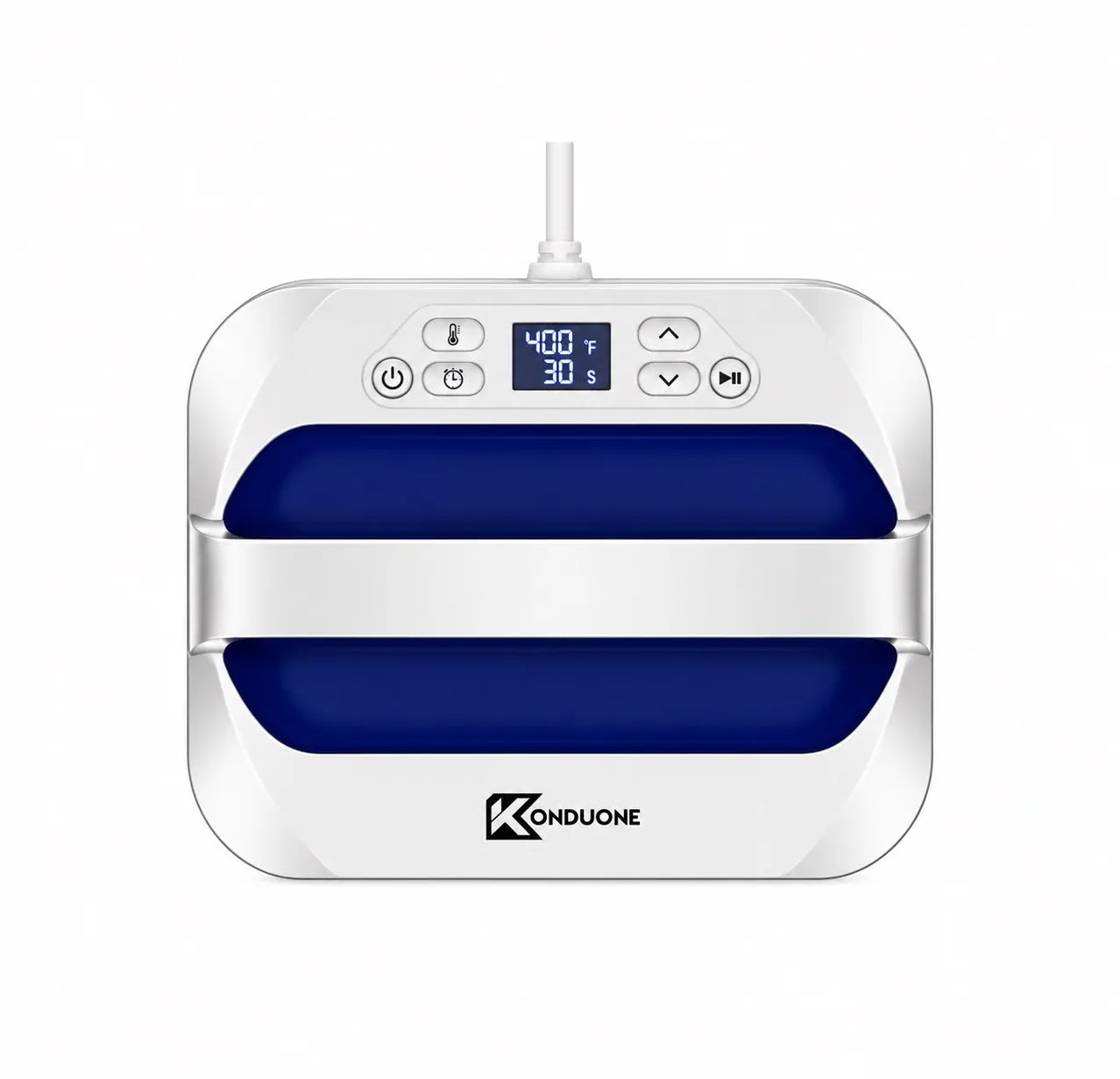
A digital heat transfer printer produces the transfer; the heat press commits it. This guide helps B2B buyers define transfer width, substrate and volume first, then match press platen size, temperature range and workflow around the printer's output — with reference models from Xiamen Spring Technology Co., Ltd.
Decoration line planning
In a garment or promotional decoration line, the digital heat transfer printer and the heat press do two different jobs. The printer lays an image onto transfer media. The press applies controlled heat and pressure to commit that image to the substrate. Buyers who treat these as one purchase frequently end up with a press platen that cannot keep up with the transfer width, or a printer whose output needs a press temperature the chosen machine does not reach. The order of the decision matters: define transfer width, substrate and daily volume first, then choose the press around the printer's output.
Key takeaways
- The printer produces the transfer; the press commits it. Match the press to the printer's output, not the other way around.
- Start from three inputs: transfer width, substrate type, and volume per shift.
- Platen size must cover the transfer; temperature range must sit inside the substrate's tolerance.
- Xiamen Spring Technology Co., Ltd. (est. 1998) manufactures thermal printers and heat presses with OEM/ODM support and exports to 60+ countries.
- Samples of 1–5 units are 100% prepaid; official orders at 50 pcs+ run on 70/30 T/T.
Why the printer comes first in the line
A decoration line is a chain of dependent steps. Design is prepared, the digital heat transfer printer outputs a transfer, the press applies it, and the piece moves to finishing. Each step constrains the next. The printer sets the upper bound on transfer width and the media characteristics the press must work with. If the press is chosen first, its platen and temperature range become fixed constraints that the printer must fit into — usually the harder direction to solve.
Thinking in this order also clarifies budgeting. The printer and press are separate capital items with separate consumable costs. Buyers who understand which machine drives which specification can compare quotes on the right basis rather than on total line price alone.
Define transfer width before anything else
The maximum transfer width the printer produces is the single most useful number in the line. It determines the largest graphic the line can handle and, in turn, the minimum platen size on the press. A 12-inch transfer needs a platen that covers 12 inches with the transfer positioned inside the heated area — not hanging over the edge.
Two practical points follow:
- Design width, not machine width. The widest graphic you actually sell defines the requirement. If most jobs are small chest logos, a wide-format printer may be over-specified and the press platen can stay compact.
- Leave margin for registration. Transfers are placed by hand or with guides; a platen that matches the transfer width exactly leaves no room for positioning error.
Write the requirement down as a number in inches or millimetres before requesting quotes. It converts a vague "we need a transfer line" into a specification both the printer and press can be matched against.
Match the substrate to temperature range
Different substrates tolerate different press temperatures. The printer's transfer media and the press's temperature range must both sit inside that tolerance. A press that reaches 205°C gives the operator headroom for media that need higher application temperatures; a press capped at a lower ceiling limits which transfers can be committed reliably.
List the substrates the line will actually run — cotton, polyester blends, coated surfaces, ceramics — and the application temperature each requires. Then check that the chosen press covers that range with the platen in contact. This is where the press specification, not the printer, becomes the deciding document. If the substrate list is not yet fixed, note it as an open item; a wider temperature range keeps more options open during ramp-up.
Let volume decide the press type
Daily volume shapes the press decision more than any other factor. Three rough bands help frame the choice:
| Volume band | What it stresses | Press priority |
|---|---|---|
| Sample and small-batch (tens per day) | Setup speed, operator control | Simple controls, quick heat recovery, compact platen |
| Production (hundreds per day) | Cycle consistency, uptime | Stable temperature hold, durable platen coating, ergonomic loading |
| High-volume line (thousands per day) | Throughput per hour, maintenance intervals | Fast heat-up, repeatable pressure, spare parts availability |
These bands are a planning aid, not a machine recommendation. The point is that volume tells you whether the press needs to prioritize heat recovery and coating durability over compact footprint, and whether a second platen or a spare machine belongs in the initial order.
Two reference presses and where they sit
Xiamen Spring Technology Co., Ltd., established in 1998, manufactures thermal printers and heat presses and offers OEM/ODM production for buyers who need private-label or modified configurations. Two presses in the current range illustrate how platen size and temperature range map to the framework above.
- C05 12x10in heat press — a 12 x 10 inch platen with a ceramic-coated plate and an 85–205°C temperature range. The ceramic coating is relevant where transfers are repeatedly loaded over the same area and platen surface wear is a concern.
- C10 12x10in heat press — a 12 x 10 inch platen with LED control and a 100–205°C range. The higher floor suits substrates that do not need low-temperature application, and the LED interface helps operators read and set temperature without guesswork.
Both share the same 12 x 10 inch platen, so transfer width requirements up to that size are covered by either. The choice between them comes down to the substrate temperature range you need and whether a ceramic-coated plate or an LED control interface fits your workflow better. Neither detail substitutes for matching the press to your printer's actual output width — it is still the printer that sets that number.
Machine details above are as listed in the current product pages. Confirm final specifications and options with the supplier before ordering.
A specification checklist for buyers
Use this list to turn a line-planning conversation into a request for quotation. Each item has a direct effect on which printer and press combination fits.
- Maximum transfer width in inches or millimetres, based on the widest graphic you sell.
- Substrate list with required application temperature for each material.
- Daily and peak volume in pieces per shift, with the shift length stated.
- Transfer media type the printer will run, including any temperature sensitivity.
- Platen requirement: the heated area must cover the transfer plus registration margin.
- Control preference: manual or LED interface, and whether operators need preset temperature settings.
- Spare parts and service expectations: which parts are likely to wear first and how quickly they can be replaced.
On commercial terms, Spring Technology ships samples of 1–5 units at 100% prepaid, so a single press and transfer test can be run before committing to a line. Official orders of 50 pieces or more are handled on 70/30 T/T, and a one-year spare parts warranty covers the press. For buyers planning a larger rollout, OEM/ODM discussions can run in parallel with the sample evaluation.
Frequently asked questions
Can I buy the printer and press from the same supplier?
Spring Technology manufactures both thermal printers and heat presses, which means platen size and temperature range can be checked against the printer's output width in one conversation rather than across two vendors.
What does a 12 x 10 inch platen mean in practice?
It is the heated working area. Transfers up to that size can be placed within the plate, with a small margin left for positioning. Larger transfers need a larger platen or a different press configuration.
Does a higher temperature ceiling matter if most of my substrates run cooler?
It matters when your media or material mix includes higher-temperature applications. If you already know every substrate runs below 150°C, the ceiling is less important than temperature stability and platen wear. Define the substrate list first, then judge.
What is the difference between the C05 and C10 apart from temperature range?
Both use a 12 x 10 inch platen. The C05 has a ceramic-coated plate and an 85–205°C range; the C10 has LED control and a 100–205°C range. Confirm the final configuration with the supplier for your specific order.
Where to start
Write down your maximum transfer width, your substrate list with temperatures, and your volume per shift. Those three numbers turn the printer-versus-press question into a matched pair of specifications. Then request samples of the press against your own transfers — the 1–5 unit sample route is designed for exactly that check — and confirm platen size and temperature range before placing a production order. The printer produces the transfer; the press commits it, and the line works when the two are specified together.