
A 12x10in platen covers many heat-transfer jobs, but oversized graphics, roll-to-roll textiles, and panel work require a larger format. This guide explains when a large format heat press is genuinely needed, how to define the format by artwork width and volume, and what to verify with any supplier of larger equipment.
Buyer's Guide
A 12x10-inch platen handles a wide range of heat-transfer work—T-shirts, tote bags, small labels, and promotional items. But when your artwork approaches or exceeds that width, or when you need to process continuous rolls or large panels, a desktop manual press no longer fits the job. This article explains when a large format heat press is genuinely required, how to define the format by artwork width and volume, and what to verify with any supplier of larger equipment.
Key takeaways:
- A 12x10in platen covers many common jobs, but not oversized graphics, roll-to-roll textiles, or large panel work.
- Define your required format by the largest single artwork dimension and your daily throughput, not by machine size alone.
- When sourcing a large format heat press, verify platen flatness, heating uniformity, pressure consistency, and warranty terms with the supplier.
- Xiamen Spring Technology's current published line tops out at 12x10in desktop manual presses (C05 and C10 models). If your work requires larger, ask suppliers specifically about their large format capabilities.
Contents:
When is a large format heat press genuinely needed?
Not every oversized design requires a larger platen. Often, you can tile or piece together smaller transfers. But certain applications make a large format heat press a practical necessity:
Oversized graphics
If your typical artwork exceeds 12 inches in width or height—such as full-back prints, large posters, banners, or oversized garment panels—a 12x10in platen forces you to either refuse the job or accept seams and misalignment. For a clean, single-pass transfer, the platen must be at least as large as the artwork.
Roll-to-roll textiles
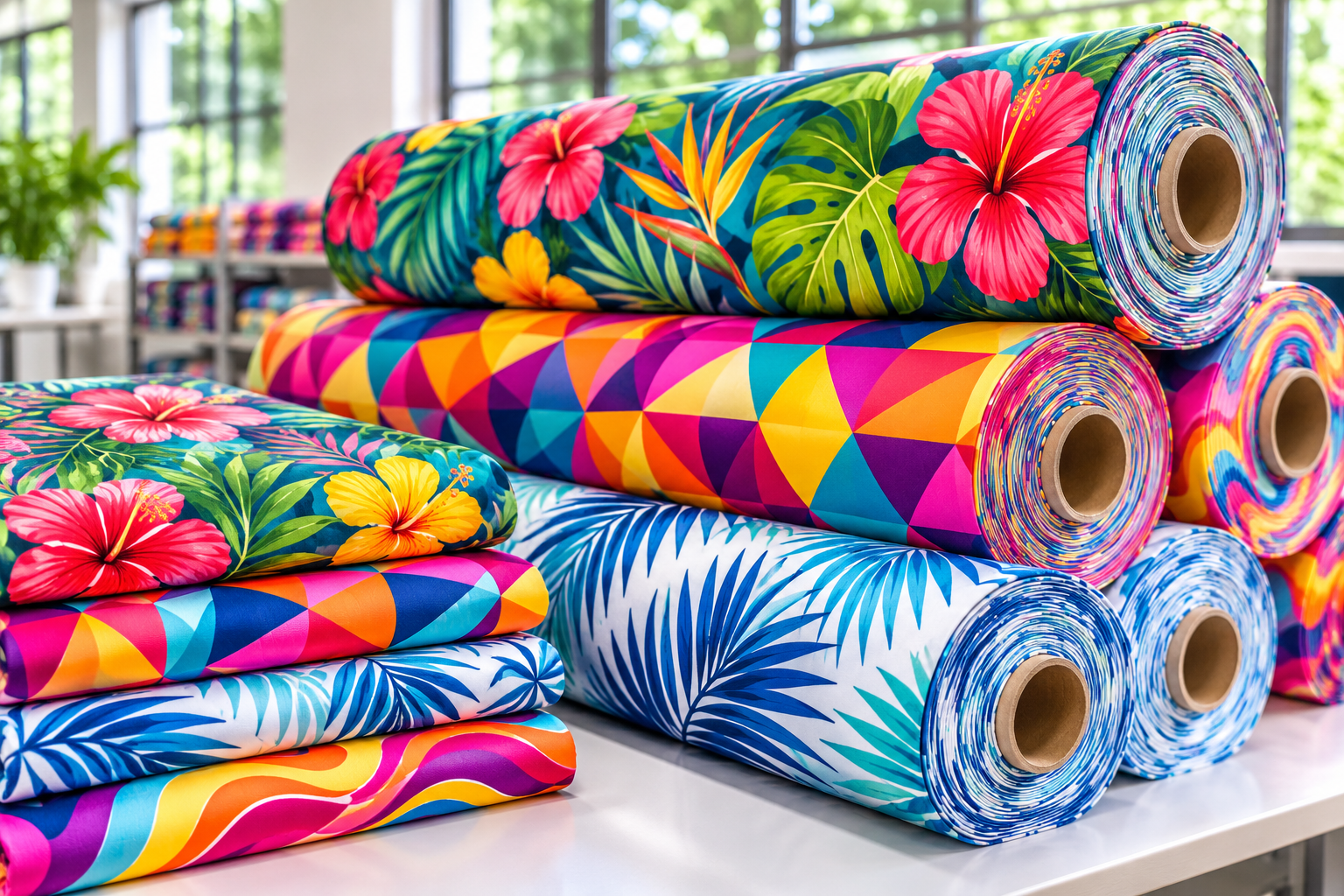
Continuous rolls of fabric, ribbon, or transfer paper cannot be processed efficiently on a fixed platen. Roll-to-roll work benefits from a large format heat press with a wide, flat platen and often a feed system that advances the material. The width of the platen determines the maximum web width you can handle.
Panel work
Rigid or semi-rigid panels—such as signage, mouse pads, placemats, or industrial components—often come in sizes that exceed 12x10 inches. A larger platen allows you to press the entire panel in one cycle, ensuring uniform adhesion and finish.
If your production mix includes any of these, a large format heat press is likely justified. If not, a 12x10in press may be sufficient, and investing in a larger machine could be unnecessary.
How to define the format by artwork width and volume
Choosing the right size is not about picking the biggest machine; it's about matching the platen to your actual work. Follow these steps to define your requirement:
1. Measure your largest common artwork
Review your order history or target market. Identify the maximum width and height of the artwork you regularly handle. Add a margin for easy loading and unloading—typically 1–2 inches on each side. The platen should be at least this size. For example, if your largest graphic is 16 inches wide, a platen of 18 inches or more is advisable.
2. Consider your volume and workflow
Higher volume may justify a larger platen even if artwork is smaller, because you can press multiple items simultaneously (e.g., two 10x10 designs side by side on a 20x16 platen). However, larger presses take up more space and may require more power. Estimate your daily throughput and decide if batching is beneficial.
3. Account for material handling
Roll-to-roll work requires a press with a feed mechanism and a platen wide enough to accommodate the roll width. Panel work may require a press with a lower platen that can support the panel without flexing. Discuss your material type and thickness with the supplier to ensure the press design is suitable.
4. Check power and space requirements
Large format heat presses typically draw more power and need a dedicated circuit. Verify the voltage, wattage, and plug type with the supplier, and ensure your facility can support it. Also, measure your available floor space and consider the clearance needed for the platen to open and for material feed.
5. Decide between manual and automatic
Manual presses are cost-effective for low to medium volume. For high volume or heavy materials, pneumatic or hydraulic automatic presses reduce operator fatigue and improve consistency. Consider your budget and production targets.
What to verify with any supplier of larger equipment
Buying a large format heat press is a significant investment. Beyond the basic specifications, ask suppliers to clarify these points:
Platen flatness and heating uniformity
A large platen is prone to temperature variations across its surface. Ask for the temperature uniformity specification (e.g., ±5°C) and how it is measured. A flat platen ensures even pressure; ask about the platen material and thickness.
Pressure consistency
For large formats, pressure must be evenly distributed. Manual presses rely on the operator; automatic presses use pneumatic or hydraulic systems. Ask about the pressure adjustment range and the mechanism (e.g., air pressure regulator).
Heating element and control
Check the heating element type (e.g., ceramic-coated, tubular) and the controller's accuracy. Digital PID controllers with timers are standard. Ask about the maximum temperature and the time to reach it.
Build quality and safety
Look for a sturdy frame that resists flexing. Safety features like thermal cut-off and insulated handles are important. Ask about the warranty coverage—what parts are covered and for how long.
Spare parts and support
Large machines may require specific spare parts. Confirm the availability of wear items (e.g., heating elements, thermocouples) and the warranty terms. A 1-year spare parts warranty is common; clarify what is included.
Sample and order terms
Before committing to a large order, request a sample unit to test with your materials. Understand the sample cost and payment terms (e.g., 100% prepaid for 1-5 units). For official orders, confirm the minimum order quantity (e.g., 50 pcs) and payment terms (e.g., 70/30 T/T).
A note on Xiamen Spring Technology's current line
Xiamen Spring Technology Co., Ltd. has been manufacturing heat press equipment since 1998 and offers OEM/ODM services. However, their current published product line consists of desktop manual presses with a maximum platen size of 12x10 inches. For example, the C05 model (12x10in, 1250W/1350W, 85–205°C, ceramic-coated platen) and the C10 model (12x10in, 1200W, 100–205°C, LED display) are designed for small to medium artwork.
If your requirements exceed 12x10 inches, Xiamen Spring Technology's standard catalog may not have a suitable large format heat press. In that case, you should inquire with suppliers who specialize in larger equipment. When evaluating such suppliers, apply the verification points above to ensure the machine meets your production needs.
For buyers whose work fits within 12x10 inches, Xiamen Spring Technology's presses offer a reliable, cost-effective solution with flexible sample terms (1-5 units, 100% prepaid) and official order terms (50 pcs+, 70/30 T/T). Their 1-year spare parts warranty provides additional assurance.
FAQ
Can I use a 12x10in press for artwork slightly larger than 12 inches?
You can sometimes press larger artwork in multiple passes, but this may result in seams or uneven transfer. For consistent quality, the platen should be at least as large as the artwork.
What is the typical lead time for a large format heat press?
Lead times vary by supplier and specifications. Ask for a production schedule and confirm it in the contract.
Do I need a dedicated circuit for a large format heat press?
Most large format presses require a dedicated circuit due to higher power draw. Check the electrical specifications with the supplier and consult an electrician.
How do I ensure consistent pressure across a large platen?
Automatic presses with pneumatic or hydraulic systems provide more consistent pressure than manual presses. Ask the supplier about the pressure distribution mechanism and any testing they perform.
By defining your format based on artwork width and volume, and verifying key specifications with suppliers, you can choose the right large format heat press for your business.