
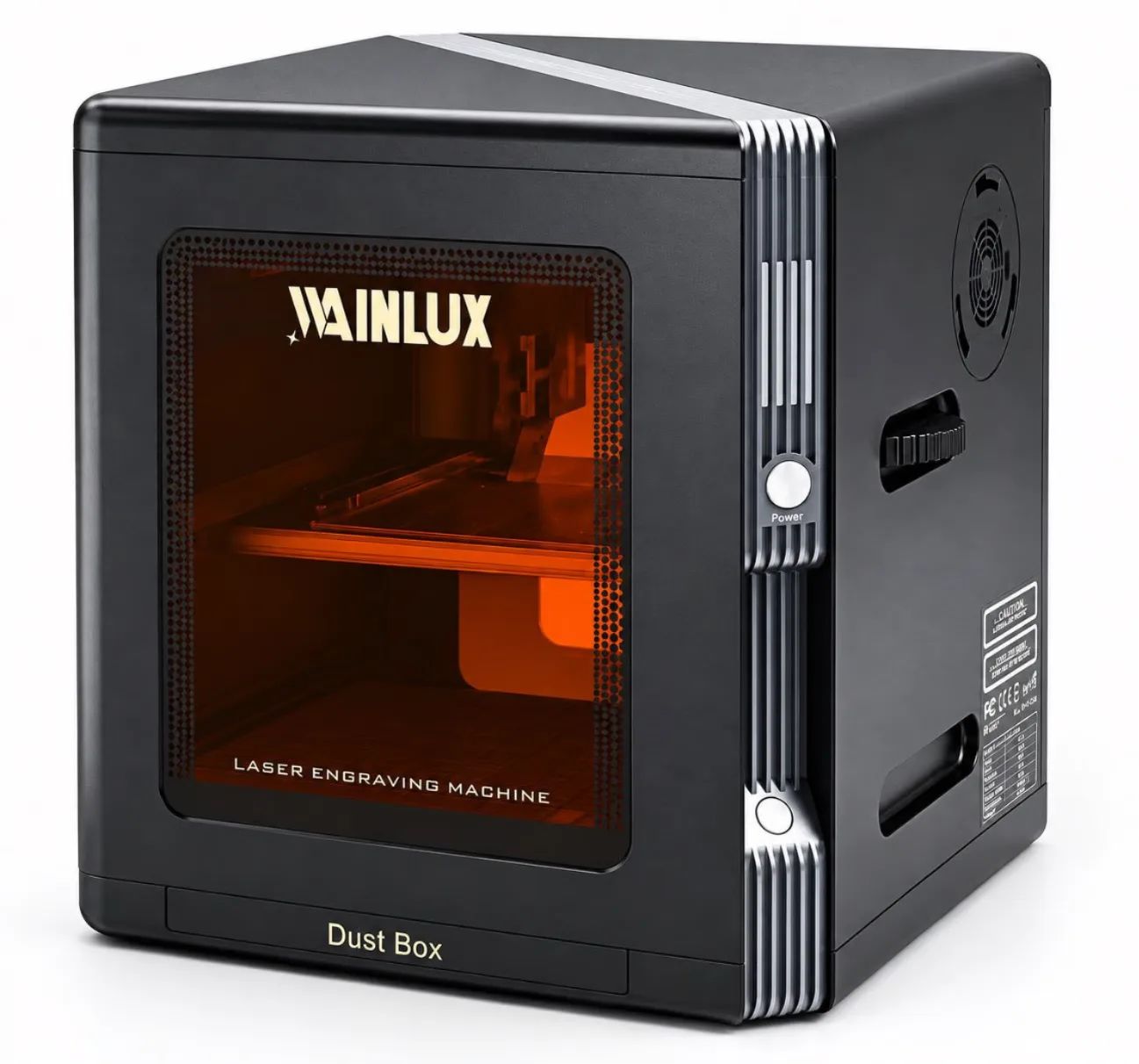
A practical comparison of the three main channels for buying a laser engraving machine — local retail, online marketplaces, and direct from a manufacturer — plus a pre-purchase checklist and concrete factory-direct order terms from Xiamen Spring Technology.
When you search for where to buy laser engraving machine near me, you probably picture a showroom or a local dealer you can drive to. Here is the honest situation: for most laser engravers — especially diode and entry-level machines — there is no big-box shelf nearby. Buyers usually choose between three real channels: a local or craft/industrial retailer, an online marketplace, or a manufacturer selling direct. Each one trades off differently on price, model choice, support, and how fast a machine reaches your bench.
- Local options exist mainly for makerspace access, hobby/craft retail, and industrial suppliers — not for every laser model.
- Marketplaces offer speed and buyer protection, but you rarely know who built the machine or who will support it.
- Factory-direct usually means minimum order quantities and longer transit, but stronger pricing, spare-parts support, and customization.
- Before paying anyone, confirm the laser wavelength, work area, enclosure type, software, and warranty terms in writing.
The three channels at a glance
| Channel | What you get | Trade-offs | Best for |
|---|---|---|---|
| Local / retail & makerspaces | Hands-on access, local pickup, community help, occasional industrial supplier stock | Limited model range; higher unit cost; few laser-specific spares | Hobbyists, classrooms, first-time trials |
| Online marketplaces | Huge listing variety, fast delivery, platform dispute channel | Unclear manufacturer identity; support often routed through sellers, not engineers | Small businesses that need a machine quickly and know the model they want |
| Direct from manufacturer | Factory pricing, customization, spare parts, warranty honored by the maker | MOQ and prepayment terms; longer shipping than domestic retail | Resellers, integrators, brand owners ordering repeatedly |
Channel 1: Local retail, makerspaces, and regional suppliers
If “near me” means you want to see a machine running before you pay, local options matter. The realistic places a laser engraver shows up near you are:
- Makerspaces and community workshops — you get supervised access to a working machine, and often the staff can tell you which laser type handles which material. Not a purchase channel by itself, but a useful way to test before ordering.
- Hobby and craft retailers — these tend to carry small-format diode machines aimed at home users. Model depth is shallow, and staff knowledge varies.
- Industrial or sign-making suppliers — if your work is production marking, a regional industrial supplier may stock or order machines for you, often with installation and local service. Expect a higher unit cost than factory-direct.
Local buying is strongest on immediacy and hands-on reassurance. It is weakest on range: a local shelf will not show you a dual-head machine or a fiber/red-laser model for metal marking, and local dealers rarely hold deep spare-parts inventory for a specific model. If the machine you need is not the one on display, you have already left the local channel.
Channel 2: Online marketplaces
Marketplaces are where most “where to buy laser engraving machine” searches actually land. They are convenient and the platform usually provides a dispute path if a parcel never arrives. The trade-off is visibility: listings often mix brands, and the seller in front of you may be a reseller rather than the factory.
What this means in practice:
- Model verification is on you. Check the stated laser wavelength, work area, and enclosure against what you actually plan to mark or cut.
- Support after delivery can be thin. When a laser module fails, a marketplace reseller may not stock the part — the manufacturer does.
- Customization is usually not offered. You buy the listing as-is; OEM logos, bundling, and firmware tweaks are off the table.
Marketplaces suit a buyer who already knows the exact model and just needs it fast. They are a poor fit if you want a long-term supply relationship or branded units for resale.
Channel 3: Buying direct from a manufacturer
Factory-direct is the channel that behaves most like a B2B purchase. You talk to the people who build the machine, you can request samples, and warranty and spare parts come from the same source. The cost is process overhead: minimum order quantities, prepayment, and shipping that takes longer than a domestic retailer’s van.
This channel’s real advantage is model range matched to application. Instead of one shelf model, you choose the laser that fits your material:
- For marking metals such as gold, silver, copper, or steel, a 1064nm red-laser machine is the relevant type — for example the WAINLUX K8-1064nm with an 8x8cm work area and 0.01mm accuracy.
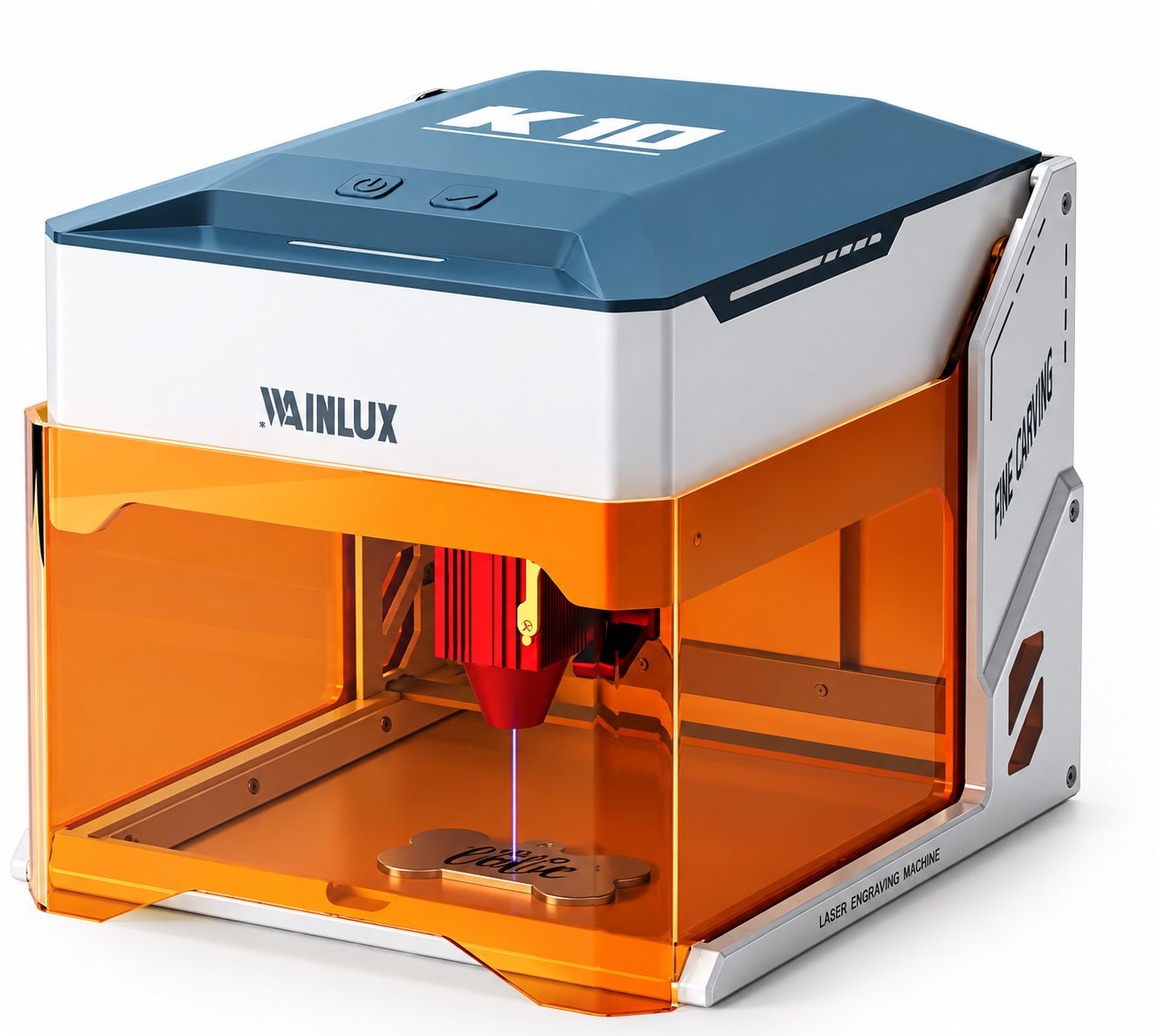
- For entry-level wood and craft work, a compact blue-diode model such as the WAINLUX K10-5W (10x10cm work area, cuts 3-5mm plywood) covers common jobs.
- For larger-format production with both metal and non-metal capability, a dual-head machine like the WAINLUX X1 offers a 30x30cm work area with 20W diode plus 1064nm heads.
Factory-direct also opens OEM/ODM conversations: different enclosures, bundled accessories, or your own branding. That is not something a marketplace listing or a local hobby retailer can provide.
What to confirm before paying any seller
Whichever channel you choose, the questions are the same. Ask them in writing before money changes hands:
- Laser wavelength for your material. Diode lasers (typically 455nm blue) handle wood, leather, and some plastics. Metal marking needs a 1064nm laser. If you need both, confirm whether the machine carries two heads.
- Work area vs your actual parts. An 8x8cm area suits keychains and small tags; a 30x30cm area suits signs and panels. Measure your largest part before ordering, not after.
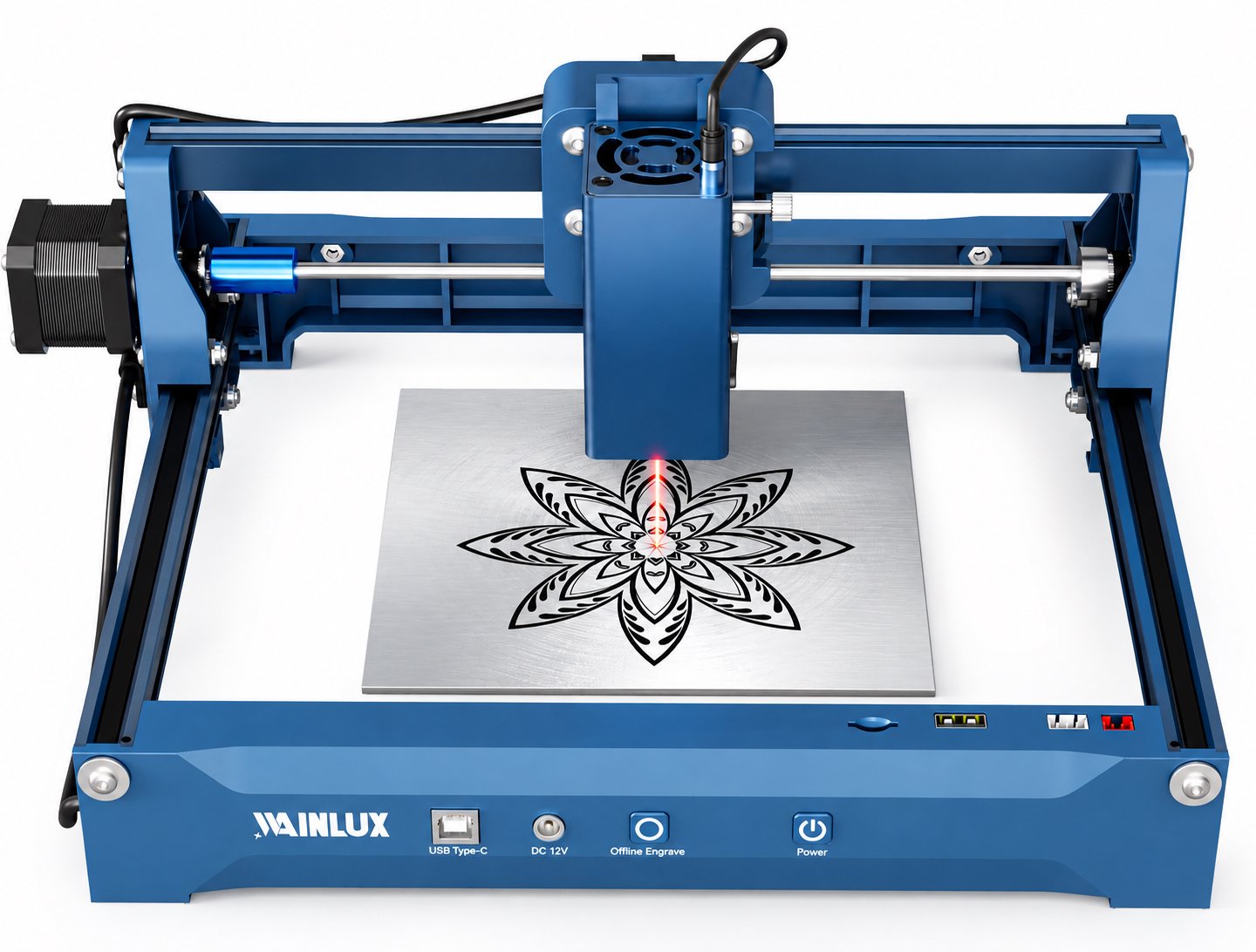
- Enclosed or open frame. Enclosed units are safer around classrooms and small workshops; open-frame units are lighter and often more portable. The WAINLUX XN001-3W, for example, is a foldable portable 3W engraver with a 9.8x8.8cm area and power-bank compatibility.
- Software and control. Ask which software is supported and whether control is via USB, Wi-Fi, or a mobile app. The WAINLUX K6-3W uses Bluetooth app control and is aimed at beginners.
- Spares and warranty. Confirm what is covered, how long, and how a claim is processed — ideally with videos of the operation and the malfunction.
- Support language and time zone. If you are ordering across borders, check who answers your emails and during which hours.
Factory-direct, made concrete
Xiamen Spring Technology Co., Ltd. has manufactured laser engraving machines in Xiamen, China, since 1998, and exports to more than 50 countries across North America, Southeast Asia, and other global markets. The company operates an ISO9001-certified quality management system (company-level, not a product certification), with a 42-member R&D team and 12 production lines.
For buyers comparing channels, the published order terms are the part that usually decides the question:
- Samples: 1–5 units, with 100% prepayment.
- Official orders: 50 pcs and above, with 70% prepayment and 30% balance before shipment by T/T.
- Shipping to a freight forwarder warehouse in China: 2–3 business days.
- International DAP: generally 5–9 business days; international air freight DDP: generally 12–15 business days; sea freight DDP varies by region.
- Warranty: 1 year for spare parts, covering non-human damage and reviewed through operation and malfunction videos.
- In-stock orders can be queued for packing the same day after payment.
That structure is the honest trade-off of factory-direct: you commit to a larger order and wait longer than a local pickup, and in return you get factory pricing, OEM/ODM options, spare parts, and a named manufacturer behind the warranty. If you also sell machines, the dealer and distributor program is the route to discuss terms.
Frequently asked questions
Is there a laser engraving machine store near me?
Sometimes — but the near-me channel is narrower than most buyers expect. Makerspaces, hobby/craft retailers, and regional industrial suppliers are the realistic local options, and each carries only a slice of the available models. If the machine you need is not one they stock, the practical alternatives are a marketplace or a manufacturer.
Can I order just one machine to test before committing?
With this manufacturer, yes — sample orders of 1–5 units are accepted, with 100% prepayment. That is the standard way to evaluate a factory-direct model against your own materials before placing an official order of 50 pcs or more.
How long does shipping take?
Shipping to a freight forwarder warehouse in China takes 2–3 business days after packing. International DAP is generally 5–9 business days; international air freight DDP generally 12–15 business days; sea freight DDP depends on the destination region.
What does the warranty cover?
Spare parts are covered for 1 year against non-human damage. Claims are reviewed using videos of the machine operating and of the malfunction, so keep both handy if you ever need to file one.
Can I get the machine branded for my business?
OEM/ODM services are available from this manufacturer. For reseller or distribution arrangements, start with the dealer program rather than a standard product order.
Your next step
If you are still deciding, sort your needs into one sentence: material, largest part size, and whether you need metal marking. That single line tells you whether you are looking for a 455nm diode machine, a 1064nm red-laser machine, or a dual-head unit — and whether a local option, a marketplace listing, or a factory-direct order actually fits.
For a quote, a sample order, or to confirm current lead time and shipping terms to your region, contact the team and include your material and part dimensions. You will get a channel-appropriate answer rather than a generic listing.