Laser imprinting is a search term buyers use for permanent, non-contact surface marking with a laser. This article clarifies how it relates to laser engraving and branding, which materials each laser wavelength suits, and the checks that matter before you buy a laser engraving machine for a workshop or production line.
"Laser imprint machine" is not a standardized machine category. In supplier catalogs and search queries, buyers use "imprint" to describe a laser system that puts a permanent mark on a surface without contact, ink, or a die. The same operation is often called laser engraving, laser marking, or laser branding. The practical question is not the label but whether the laser wavelength, power, and work area match the material and part you need to mark.
Key takeaways
- Laser imprinting generally means permanent surface marking by laser, as distinct from ink stamping or pad printing.
- 455nm blue diode lasers mark wood, bamboo, acrylic, leather, coated or painted metal, and glass with a coating.
- 1064nm lasers mark bare metal such as gold, silver, copper, steel, and zinc alloy.
- Check wavelength, work area, software and file transfer, and any enclosure or extraction requirement before you specify.
What "laser imprint" actually means
The word imprint carries a legacy from mechanical stamping and ink marking, where a die or plate presses a design onto a surface. A laser imprint machine removes that tooling. The beam delivers energy to a small area, and the material changes color, ablates, or is engraved depending on the wavelength and power. The mark is produced by the material response, not by an applied ink layer, which is why laser marks are generally considered permanent surface marking.
Because the term is loose, two buyers can search "laser imprint machine" and end up needing different equipment. One may want to brand wooden gift boxes; another may need serial numbers on stainless steel fittings. Both are laser marking, but a single machine type rarely covers both material families well.
Imprint vs engraving vs branding
These terms overlap in daily use. Their useful distinction is depth and intent.
- Imprinting / marking: a surface mark, often a logo, QR code, or text. Depth may be minimal.
- Engraving: the beam removes material to create a recessed area. Depth is part of the specification.
- Branding: a commercial purpose, not a process. A brand mark can be marked or engraved.
When a supplier quotes a "laser imprint" job, confirm whether the customer expects a surface color change or a measurable groove depth. That single question changes machine power and processing time.
Which laser wavelength fits which material
Wavelength is the first selection filter. The two common configurations in diode and dual-head desktop machines are 455nm blue diode and 1064nm.
| Laser type | Typical materials | Notes for buyers |
|---|---|---|
| 455nm blue diode | Wood, bamboo, acrylic, leather, coated or painted metal, glass with coating | Good for organic materials and coated surfaces; bare metal is not the target. |
| 1064nm | Bare metal: gold, silver, copper, steel, zinc alloy | Suited to metal marking where a diode beam would reflect rather than absorb. |
If your parts mix wood and bare brass, a dual-head machine covers both in one frame. If your work is entirely wood and leather, a single blue diode unit is the simpler specification.
What a laser engraving machine includes
The hardware is only part of the purchase. For a desktop unit, confirm the following:
- Work area, since it limits the largest single part or the number of parts per cycle.
- Cutting or engraving capability for the material thickness you actually use.
- File transfer and control methods: WiFi, PC connection, USB-C, TF card, or offline operation.
- Enclosure and fume handling, which affect where the machine can be placed.
Two reference configurations
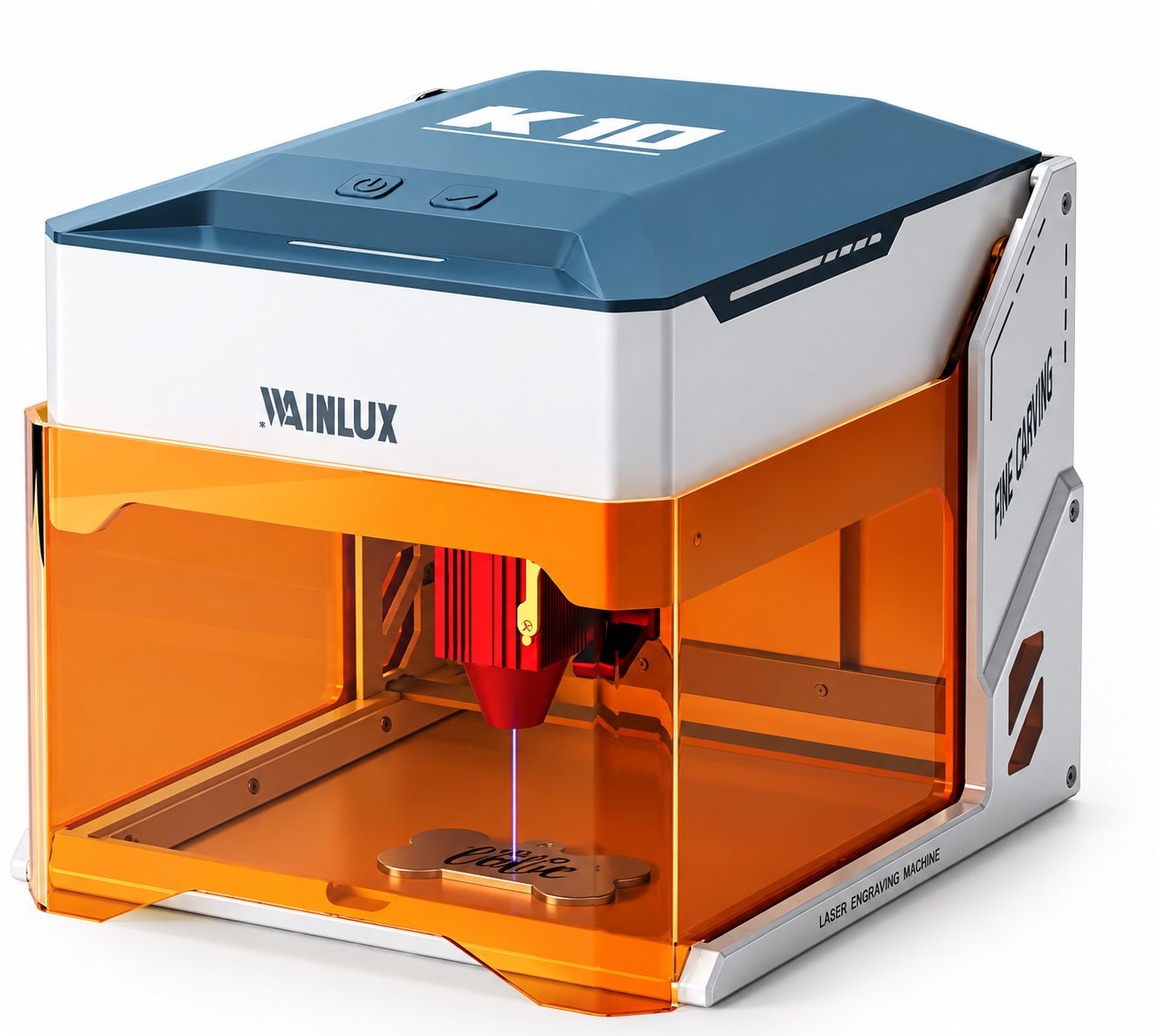
The WAINLUX K10-5W uses a 455nm blue diode at 5W with a 10x10cm work area. It cuts 3-5mm plywood and supports WiFi, PC, and offline control, with an enclosed housing. It is a fit for wood, bamboo, acrylic, leather, and coated surfaces within that small work area.
Product page: WAINLUX K10-5W laser engraving machine
The WAINLUX X1 dual combines a 455nm head and a 1064nm head in one machine, with a 30x30cm work area and WiFi, USB-C, and TF-card offline operation. Buyers who need both organic-material marking and bare-metal marking on the same bench can evaluate this configuration instead of buying two separate units.
Product page: WAINLUX X1 dual-laser engraving machine
Buyer checks before you specify
Use these checks to turn a vague requirement into a machine specification.
| Check | What to establish |
|---|---|
| Material family | Organic (wood, leather, acrylic) or bare metal. This determines the wavelength. |
| Mark type | Surface mark, deep engraving, or cut-through. This affects power and time. |
| Part size | Largest part or batch layout against the work area, for example 10x10cm versus 30x30cm. |
| Throughput | Parts per hour at the intended mark, confirmed with a sample if possible. |
| Workflow | Which file formats and transfer method your operators will use daily. |
| Environment | Enclosure, ventilation, and available bench space. |
| Supplier support | Spare parts, software updates, and technical response channels. |
A sample test on your own material is the most reliable check. Ask the supplier to mark a representative part and confirm the visual result and, where relevant, the depth.
Supplier and manufacturing context
Xiamen Spring Technology Co., Ltd. was founded in 1998 and has 25 years of manufacturing experience. The company operates under ISO9001 at the company level and offers OEM/ODM services, with exports to more than 50 countries. For buyers comparing desktop laser units, ask which configuration in the supplier's range matches your material mix and work area, and request the current specification sheet for that model.
FAQ
Is a laser imprint machine the same as a laser engraving machine?
In most buyer conversations, yes. "Imprint" describes the marking result; "engraving" describes a process that may remove material. Confirm the mark depth your application requires.
Can one machine mark both wood and bare metal?
A 455nm blue diode covers wood, leather, acrylic, and coated metal. Bare metal such as steel or brass needs a 1064nm laser. A dual-head machine combines both in one frame.
What work area should I choose?
Measure your largest single part and the batch layout you plan per cycle. A 10x10cm area suits small items; 30x30cm covers larger panels and multi-part jigs.
Do I need an enclosure?
An enclosed housing helps contain the beam area and supports fume management. It also affects where the machine can be installed in a workshop.
How do I confirm the marking result before ordering?
Send a sample of your material and the artwork. A mark test on that sample is more useful than a generic material list.
Next step
Match your material list and largest part to the wavelength and work area first, then confirm the control workflow your operators will use. If you need both organic-material and bare-metal marking, review the dual-laser configuration; if your work is wood, acrylic, leather, and coated surfaces within a small area, review the K10-5W specification. For model-specific details, request the current datasheet or arrange a sample mark with the supplier.