
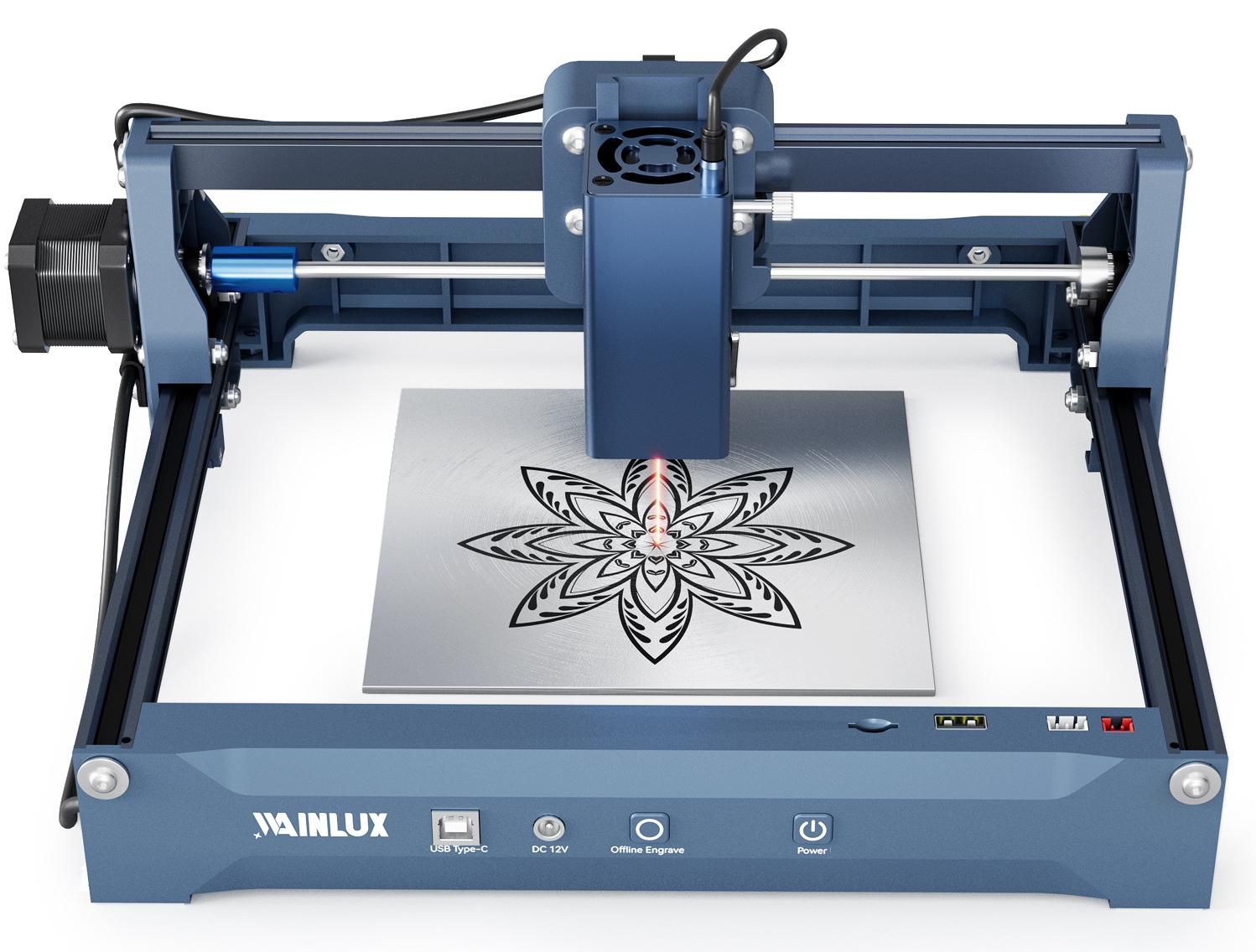
A production-volume-first guide to choosing a commercial laser engraver, matching gantry, galvo, dual-laser and large-format machines to daily output tiers.
Most commercial laser engraver comparisons start from features. For a business purchase, they should start from throughput: how many units per day you must personalize, and what happens to your margin when the machine is the bottleneck. This guide matches machine types to production volume, using the real performance tiers available on today's desktop-class equipment.
Step 1: Define Your Daily Output Honestly
Write down three numbers before comparing machines: units per day at launch, units per day in high season, and the longest single item you will engrave. A shop personalizing 20 keychains a day and a workshop engraving 200 tumblers a night need different architectures — the difference is not marketing, it is machine type.
Step 2: Match Machine Architecture to Volume
Low volume, wide variety (up to roughly 30–50 pieces/day)
A compact gantry diode machine covers most needs. Entry units like the WAINLUX K10-5W (8x8cm bed, cuts 3–5mm plywood) handle logos, tags and small gifts; the X2 line (15x20cm) adds room for larger items and, at 10W, engraves blackened stainless steel. Setup flexibility matters more than raw speed at this tier.
Medium volume, repeatable jobs (50–200 pieces/day)
This is where architecture changes the economics. A galvanometer machine steers the beam without moving the whole head, so engraving runs noticeably faster than gantry-style machines — which matters when every job is the same logo on the same product. The WAINLUX Z3-5W galvo (8x8cm) is built exactly for this: batch personalization of keychains, tags, coasters and gifts. Pair it with smart-positioning models like the F1 line (built-in screen, 10x10cm) to shorten repeat-job setup further.
High volume and larger workpieces (200+ pieces/day or oversized items)
Step up in bed size and power. The X1 line (30x30cm) fits panels, leather goods and multi-item batches in one run; the L8 line (40x40cm, 20W–40W) is the production tier that also cuts — 12mm plywood at 20W, 15mm plywood and 20mm pine at 40W in a single pass — with the air pump and honeycomb board that clean cutting requires.
Mixed non-metal + metal orders
If your order book includes both tumblers and metal tags, two single-wavelength machines or one dual-laser unit (455nm + 1064nm in one frame) avoids buying and maintaining two separate production stations.
Step 3: Calculate Throughput Before You Buy
Compare machines with a simple job: a 60x60mm logo, 300 dpi, on your material. Ask suppliers for realistic engraving time per unit, plus setup and fixture time. A machine that engraves 40% faster but takes twice as long to set up loses money on short runs. This is also where control options matter: PC, mobile app and offline modes each shave setup time differently in a production queue.
Step 4: Buy for the Season After Next
Commercial buyers should size the machine one volume tier above today's numbers. The cost difference between tiers is small compared with the cost of a second purchase — or a lost B2B client you had to turn away in high season. Bed size, in particular, cannot be upgraded later.
FAQ
Is a galvo machine always faster?
For small, repeatable marking within its work area, yes — the beam steering is inherently faster. For large-area artwork, a gantry machine's bigger bed wins. Match the architecture to your job profile, not to the trend.
What wattage for commercial daily use?
3W–5W units handle engraving-focused work; 10W adds blackened-stainless capability; 20W–40W is the cutting tier. Choose by your material list first, throughput second.
How do I scale from one machine?
Start with the architecture that matches your volume tier, then add identical units rather than jumping categories — training, files and fixturing carry over.
Size Your Machine With Us
Send your daily unit volume and product list to [email protected] — Xiamen Spring Technology Co., Ltd. manufactures the WAINLUX diode, galvo, 1064nm and dual-laser lines and will recommend the tier that fits your production math, with samples from 1–5 units.