
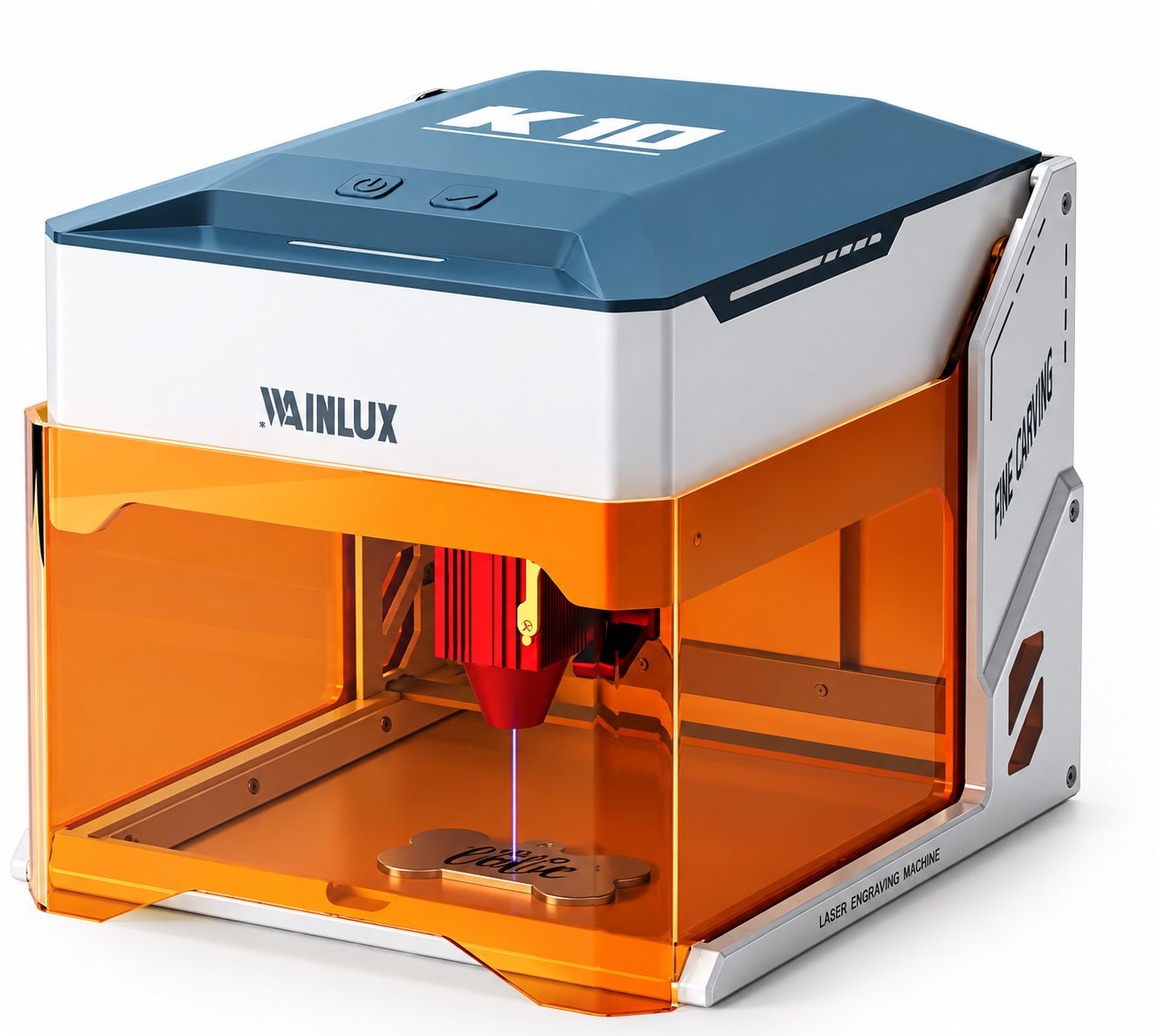
A practical guide for small business owners choosing a laser engraver. Match the machine to the job that pays the bills—personalized gifts, signage, or metal tags—and consider work area, laser source, and batch workflow. Includes a decision table and supplier service checklist.
Buyer's Guide
You are buying a laser engraver for small business use. That means every dollar of the machine cost needs to come back through paid work—personalized gifts, signage, metal tags, or the next order your customers ask for. The buying decision is not about the highest wattage or the longest spec sheet. It is about matching the machine to the job that actually pays the bills, then checking whether the supplier can support you after the sale.
- What material will you engrave or cut most often? Wood, acrylic, coated metal, bare metal?
- What is the largest single piece you need to fit on the bed?
- Will you run one-off pieces or batches of 20–100 identical items?
- Do you need the machine to run without a connected PC?
- Who will service it, and how quickly can you get replacement parts?
Start with the Job, Not the Wattage
Small businesses rarely buy a laser for one universal task. The work tends to fall into a few recognizable categories, and each one points to a different machine profile.
Personalized gifts and small keepsakes
Wooden keychains, coasters, phone cases, leather patches, acrylic ornaments. These jobs need a modest work area, good detail resolution, and a workflow that lets you repeat the same design across many pieces without re-setup. A 10x10 cm bed handles most gift items. If you plan to engrave larger plaques or cutting boards, step up to a 30x30 cm bed.
Signage and larger-format pieces
Door signs, menu boards, wayfinding panels, event displays. These require a larger work area—often 30x30 cm or 40x40 cm—and enough cutting power to get through plywood or acrylic sheet in one or two passes rather than five. Larger beds also mean you can nest multiple small pieces per run, which changes your batch economics.
Metal tags, industrial labels, and barcode plates
Stainless steel tags, aluminum nameplates, tool markings, serial number plates. These jobs are not about cutting depth. They are about marking metal with high contrast and repeatable positioning. A 1064 nm fiber laser source is the relevant category here, not a diode module. Look for accuracy figures and marking speed that match your production rhythm.
Match the Machine to the Job
The table below maps common small-business jobs to the machine characteristics that matter for each. It is a starting point for narrowing your shortlist, not a substitute for confirming material samples with the supplier.
| Typical job | Work area to look for | Laser source | Batch workflow needs |
|---|---|---|---|
| Personalized gifts, small keepsakes | 10x10 cm to 30x30 cm | Diode, 5W–10W | Offline mode for repeating designs without a PC |
| Signage, plaques, larger decor | 30x30 cm to 40x40 cm | Diode, 10W–40W depending on material thickness | Nesting multiple pieces per run; offline queuing |
| Wood cutting up to 12–15 mm | 40x40 cm | Diode, 20W–40W | Air assist and multi-pass control matter more than top speed |
| Metal tags, labels, barcode plates | 8x8 cm to 15x20 cm | 1064 nm fiber | Repeatable positioning; offline mode for queued jobs |
Two practical points sit behind that table.
Work area is a batch variable, not just a size limit. A 40x40 cm bed lets you place four 10x10 cm gift blanks in one run. If your gift orders arrive in batches of 50, that difference in nesting capacity changes how many hours the machine runs per order. For one-off custom pieces, a 10x10 cm bed may be enough.
Offline mode is a workflow feature, not a spec. It lets an operator run queued jobs without a connected PC. For a small business where the laser sits in a workshop and the design computer sits in an office, this removes a cable and a point of failure. It also means a second person can load and run jobs while the designer prepares the next file.
Three Job Profiles, Three Machine Profiles
Profile A: The gift and keepsake maker
You sell personalized items online or at markets. Orders arrive in small batches. You need a machine that is safe to run in a home or small workshop, easy to set up, and capable of repeating the same design across many pieces. A fully enclosed diode machine with a 10x10 cm work area and 5W power covers this profile. The WAINLUX K10-5W fits here: 10x10 cm work area, 5W, cuts 3–5 mm plywood, fully enclosed, with offline mode for repeating jobs.
Profile B: The signage and cutting shop
You take on larger pieces and need to cut through plywood up to 12–15 mm. A 40x40 cm bed and a 20W or 40W diode source are the relevant range. Larger beds also let you run mixed jobs—cutting acrylic sheet for one customer while engraving wooden blanks for another in the same session. The L8-20W and L8-40W models sit in this category, both with a 40x40 cm work area and 12–15 mm plywood cutting capability.
Profile C: The metal marking specialist
You mark stainless steel, aluminum, or coated metals for industrial tags and labels. A 1064 nm fiber source is the relevant category. Look at accuracy and marking speed. The WAINLUX K8-1064nm offers 1064 nm metal marking, an 8x8 cm work area, 0.01 mm accuracy, and up to 2000 mm/s. For larger metal tags, the X2-1064NM covers a 15x20 cm area. For larger-format general engraving with a 10W diode source, the X1-10W provides a 30x30 cm bed.
Supplier Service Is Part of the Purchase
A laser engraver is a production tool. When it stops, your order queue stops. The supplier's ability to support you after the sale is not a soft consideration—it belongs on the same checklist as work area and wattage.
Questions to put to any supplier before you commit:
- Who provides technical support, and through what channel? A one-on-one engineer contact is different from a generic support inbox.
- Are replacement parts available, and what is the typical lead time?
- Does the supplier offer OEM or ODM options if you want your own branding?
- What documentation ships with the machine—manual, wiring diagram, maintenance schedule?
- Can the supplier provide material sample settings for the materials you plan to run?
CNSpring Tech has been manufacturing laser equipment since 1998, holds ISO9001 at the company level, and exports to more than 50 countries. The company offers OEM/ODM services and one-on-one engineer support. Those facts matter less than how they translate into your specific situation: confirm the support channel, the parts path, and the documentation package before you order.
FAQ
Diode machines handle wood, acrylic, leather, and coated materials. Bare metal marking generally requires a 1064 nm fiber source. Some businesses run two machines—one diode for organics, one fiber for metal—rather than trying to cover both with a single unit.
It depends on the size of your largest piece and how many you want to run at once. If your typical order is 20 small gift blanks, a 30x30 cm bed lets you run several pieces per cycle. If you cut signage panels, measure your largest panel first.
It lets the machine run a queued job without a connected PC. In a small business, that means the laser can keep running while the design computer is used for something else, or while the operator loads the next batch of blanks.
Ask the supplier for cut samples on the specific plywood or acrylic thickness you plan to use. Published figures such as 3–5 mm plywood cutting for a 5W diode, or 12–15 mm for a 20W–40W diode, are starting points. Actual results depend on material density, focus, and pass count.
Next Step: Match a Machine to Your Paid Work
Write down your three most common jobs, the largest piece in each, and your typical batch size. That list is the shortest path to the right machine. If you want help matching a model to your work, send the list to CNSpring Tech and ask for a recommendation based on the job, not the spec sheet.
Founded in 1998, CNSpring Tech manufactures laser engraving equipment and exports to more than 50 countries. The company offers OEM/ODM services and one-on-one engineer support.